
When did this happen, and why? When did we go from “Do you need some help?” to “This is going viral”? When did we stop showing human decency to fellow humans and choose content instead?
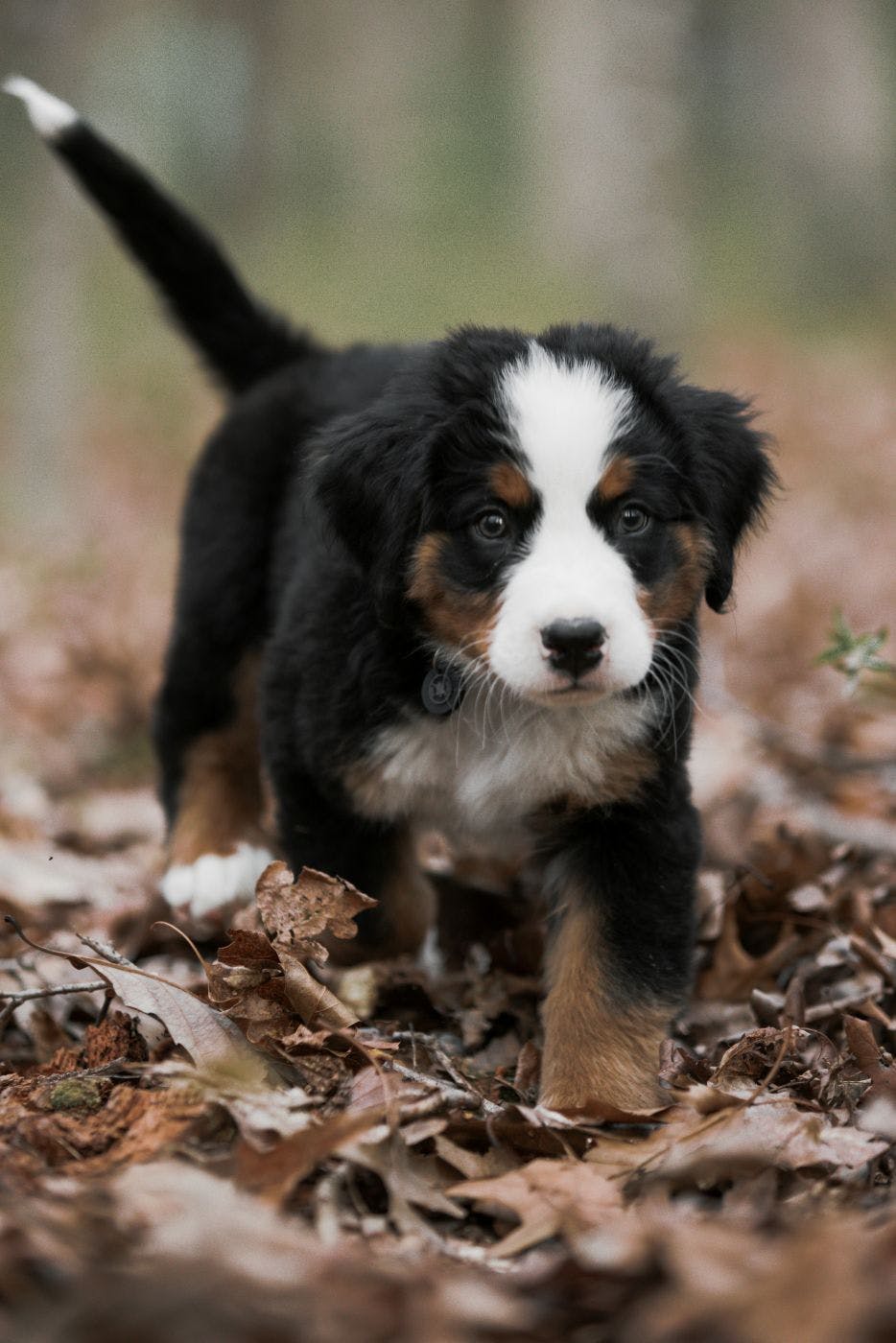
When I am completely stressed by the news of the world, the day at the office, and the loud sex of my neighbors, I seek solace in videos of Bernese Mountain Dog puppies. Yup. I love them. I could watch these puppies scamper and frolic, wrestle with their owners, and nap for hours on end, and I can feel the tension of my day dropping away. That’s my key. That’s my solace. Puppies. I can usually drag myself back to reality after a ten- or fifteen-minute puppy session. People who know me know this about me, and when a friend senses I’m having one of those days, a puppy video shows up in my feed, and all is right with the world. I love all kinds of animals, but Bernese Mountain Dog puppies are the best.
Two days ago, I received a link to a video a friend thought I would enjoy. It wasn’t about puppies, but about humans stopping their lives and taking huge risks without thinking twice to save an animal. The video featured dogs being rescued from floods, cats saved from high trees, the usual stuff. But there were also scenes of villages coming to the aid of a baby elephant, a man freeing a wolf from a leg trap, and a deer being dragged off a frozen lake. All manner of humans just saying, screw this, that animal needs help, and I’m going to help. Courageous, selfless individuals who saw an animal in need and acted. It was heartwarming, exciting, and hopeful.
In each video, there is a moment when the wild animal, deer, wolf, eagle, realizes the person handling them is a friend. The animal relaxes and allows itself to be helped. It’s that moment when I see people at their best. Human and animal together, one helping, the other accepting. Truly beautiful stuff.
Along with this wonderful video were, of course, links to more. I should know better, but I’m still as dumb as a bag of dumb, so I clicked. They took me to video pages where I saw more animal content, but I was also offered other categories. One in particular caught my eye: “When Karens Get Instant Karma.” These videos consist of people having meltdowns in public. Some are alcohol-fueled, some fueled by entitlement. A good number, though, appear to be fueled by mental health issues or drug addiction. That’s where things got interesting to me.
In the videos of humans helping animals, someone is filming the rescue. Of course they are. Someone has to document that humans can be humane. But in those videos, the person filming is simply capturing what happens. They aren’t commenting. They’re witnessing. What stunned me was the contrast between those videos and the “Karen” ones.
In the animal videos, someone sees a struggling creature and goes into action. Their first instinct is to help. Then someone pulls out a phone and captures the rescue on video.
In the “Karen” videos, we see an upset, struggling human, whether they’re on drugs or in need of mental health care, and immediately, the cameras come out. People shout things like, you go, Karen, or I’m getting this all on video, or you’re going viral tonight, you’re going to be famous.
As far as my wee mind can guess, animals don’t have psychological problems. They don’t have drug addictions, unless we’re talking about that bear that ate all that cocaine. Animals don’t have the depth of intelligence or emotional complexity that humans have, so they don’t need therapy or mental health experts. They don’t have public breakdowns the way humans sometimes do. They don’t need what humans need.
Humans need understanding, care, and help. What humans often get is far less than what we are willing to give random animals.
Last week I was at Safeway, doing my grocery shopping, minding my own business. I found myself in the soup aisle, standing near an older woman who was very short. She was looking up at the top shelf, and she looked stressed. In the aisle with us were a few young adults. One of them held up a phone and started recording this woman. I have no idea why. But their action made me really see her.
My mother was short. Five feet zero inches tall. One time, I happened to be in the same supermarket as her while she was doing her weekly shopping. I came around a corner and saw my sweet little mom looking up at a high shelf and scanning the aisle for help. She saw me, her face lit up, and I grabbed a package of the zero-sugar cookies she loved from the top shelf for her.
So when I saw this older woman in Safeway, I knew exactly what she was going through. I stepped over and asked if she needed help. Then I reached up and grabbed a jar of pickled onions from the top shelf for her. I handed it to her, and she started telling me how she uses the onions in a recipe her husband loves. I stood and listened. I talked with her. It was fine.
I heard the young adults laughing, thinking I was some kind of rube who had been caught in a conversation with an old person, and that was hilarious.
Their instinct was to pull out a phone and record this older woman. If she had been a dog or a cat, a goat or a lemur, I’m sure they would have jumped in to help. But an older woman in a grocery store, that’s not cause for help. That’s cause for content.
When did this happen, and why? When did we go from “Do you need some help?” to “This is going viral”? When did we stop showing human decency to fellow humans and choose content instead? Why don’t we extend the kindness and care we so freely offer animals to our fellow travelers? When did we trade human decency for content?

The Comfort of Superiority
If I’m honest, what those “instant karma” videos offer isn’t just entertainment. They offer elevation. Watching someone unravel in public creates a sharp, immediate contrast. That person is chaotic. I am composed. That person has lost control. I am still in control. The distance between us feels reassuring.
Superiority is stabilizing. It reassures us that whatever is happening on screen is not happening to us. When we lift a phone and begin recording, we formalize that distance. We are no longer participants in the moment. We are observers. Narrators. Curators of someone else’s worst day. The camera doesn’t just capture the scene; it subtly positions us above it.
Helping, on the other hand, collapses that distance. To step in is to risk being pulled into unpredictability. It might be awkward. It might be uncomfortable. The person might lash out. They might reject the help. They might expose something raw that we would rather not touch. Superiority keeps us clean. Compassion involves contact.
There is also a quiet relief in comparison. Watching someone else spiral can produce the unspoken thought: at least that isn’t me. At least I’m not that far gone. It’s not a noble instinct, but it’s human. And social media amplifies it by offering endless examples of other people at their most unguarded.
Animals don’t trigger the same dynamic. A trapped deer does not threaten our sense of self. A dog stuck in floodwater does not compete with us. Helping an animal allows us to feel capable without feeling implicated. Helping a struggling human requires us to acknowledge that we are made of the same fragile material.
That is harder.
The Safety of Looking Down
Superiority does more than elevate us. It organizes the world. It divides people into categories that feel stable. The composed and the chaotic. The rational and the irrational. The ones who have it together and the ones who don’t. Once those lines are drawn, we know where we stand. There’s relief in that clarity.
Public unraveling is unsettling because it collapses the illusion that we’re fundamentally different from the person coming apart. Most of us move through the world managing ourselves carefully. We monitor tone. We regulate expression. We swallow things. We postpone reactions. We hold it together because that’s what adulthood requires. When someone fails to do that in public, it exposes how fragile that management really is.
Looking down restores order. It allows us to say, that is not how I behave. That is not who I am. In that moment, we get to believe in our own stability.
But the belief is thinner than we admit. Stability is often circumstantial. It depends on sleep, health, money, support, timing, and invisible variables that can shift without warning. The person screaming in the parking lot may not be fundamentally different from the person filming them. They may simply be further along a continuum none of us likes to acknowledge.
Superiority shields us from that recognition. It keeps collapse at a distance. It reassures us that chaos belongs to someone else.
There‘s also a group dynamic at work. When someone begins recording, and others gather, laughter or commentary can spread quickly. The shared reaction creates belonging. We are united not by care but by contrast. We bond over not being the person on camera. That kind of bonding is immediate and low risk. No vulnerability required. No exposure. Just an agreement that the person in distress has crossed a line we haven’t.
Compassion disrupts that bond. To step out of the circle and move toward the struggling person is to leave the safety of the group. It risks social friction. It risks being misunderstood. It may even invite ridicule, as it did in the soup aisle. Superiority is socially efficient. Compassion is socially risky.
And yet, the cost of that efficiency is quiet but real. Every time we choose to look down instead of step in, we reinforce the idea that vulnerability forfeits dignity. We train ourselves to see breakdown as entertainment rather than a signal. We strengthen the reflex to capture instead of connect. That reflex did not appear overnight. It was nurtured.
The Machine That Rewards It
The instinct to look down rather than step in is human, but it did not become reflexive by accident. Social media built an environment that rewards that instinct and punishes its opposite. The platforms we use every day are not neutral containers for human behavior. They are engineered systems designed to capture and hold attention. The content that spreads is not the content that heals; it is the content that provokes.
A person unraveling in public provides exactly the kind of stimulus these systems favor. The scene is emotionally charged, easy to interpret without context, and immediately shareable. Viewers can react within seconds. They can condemn, mock, diagnose, or celebrate the “karma” of it all. Each reaction feeds the machine. Each share amplifies the moment. The person at the center of the scene becomes less a human being and more a catalyst for engagement.
Compassion doesn’t compete well in that environment. Helping someone in distress is usually quiet, slow, and unremarkable from a distance. It doesn’t produce spectacle, generate outrage, or applause. It often happens without documentation at all. In a system that measures value through visibility, the unseen act has little standing.
Over time, living inside that system alters our perception. We begin to interpret public moments through the lens of potential performance. Instead of asking what this person needs, we are subtly trained to ask what this moment is worth. The shift is small but profound. The phone becomes not just a tool but an intermediary between us and the world. It creates distance where proximity once existed.
That distance changes our behavior. Recording feels safer than intervening. Posting feels more impactful than listening. Reaction replaces responsibility. The platforms don’t force us to behave this way, but they make this behavior easier, faster, and more socially reinforced than its alternative.
When enough of us internalize those incentives, the culture shifts. What once would have been an uncomfortable private moment becomes public currency. What once might have triggered concern now triggers commentary. The erosion is gradual, but it is real.
What It’s Costing Us
The most obvious cost is to the person being filmed. A worst moment, stripped of context, can follow someone for years. A breakdown that might once have passed in relative obscurity can now be replayed endlessly by strangers who will never know the full story. Dignity becomes collateral damage. The internet doesn’t forget easily, and it rarely forgives. But the deeper cost may be to the rest of us.
Every time we choose to record instead of respond, something subtle shifts in how we experience other people. We become spectators of one another’s lives rather than participants in them. Vulnerability begins to look like performance, and performance becomes the dominant way we interpret public emotion. We start to assume that if something is happening in front of us, it is happening for an audience. That assumption hardens us.
It becomes easier to doubt sincerity. Easier to mock distress. Easier to treat another person’s unraveling as proof of their character rather than as evidence of their circumstances. Over time, empathy requires more effort because our first instinct has been trained in another direction.
There is also a private cost. Superiority may feel stabilizing in the moment, but it narrows us. It reduces our capacity to see complexity. If we repeatedly reinforce the idea that we are fundamentally different from the person losing control, we lose the humility that keeps us connected to our own fragility. We forget how dependent our composure is on conditions that can change.
And then there is the cost of ordinary kindness. The soup aisle is not dramatic. It will never trend. It will never be stitched, dueted, or monetized. It exists outside the spectacle. But when spectacle becomes the primary lens through which we view public life, those quiet moments start to feel less significant. They’re easy to overlook because they don’t perform.
If we continue in that direction, public spaces become stages rather than shared environments. People become potential content rather than fellow travelers. The question shifts from “What does this person need?” to “How will this play?”
That shift alters the texture of everyday life. It makes us more guarded, suspicious, and less inclined to step forward. When dignity is no longer assumed, everyone moves through the world slightly armored.
We may not notice the erosion day to day. It happens in increments. A video here. A laugh there. A reflex strengthened. But taken together, those increments reshape what we consider normal. And what we normalize, we eventually stop questioning.
Why Animals Feel Safer
The contrast that started all of this still lingers. We will wade into floodwater for a dog, kneel in the mud for an elephant, and slide across ice for a deer. Yet we hesitate when the one in distress is human.
Part of it is simplicity. Animal suffering is usually visible and concrete. A leg in a trap. A body in water. A creature stranded. The problem is clear. The solution is physical. Help is immediate and measurable. The animal either gets free or it doesn’t.
Human suffering is rarely that clean. A person shouting in a parking lot may be contending with addiction, grief, mental illness, humiliation, fear, or some combination of all of it. The problem is layered. The solution is uncertain. There is no single action that guarantees resolution. Helping a human being often means entering ambiguity.
Animals also do not threaten our identity. A trapped wolf doesn’t accuse us. A stranded dog doesn’t insult us. A baby elephant doesn’t carry political beliefs, social grievances, or personal history that might complicate our response. We can easily project innocence onto animals. Their vulnerability feels uncomplicated.
Human vulnerability is more difficult. When someone behaves badly in public, we’re forced to hold two realities at once: that their behavior may be harmful, and that their distress may be real. That tension requires nuance. It requires us to separate the act from the person. It requires emotional labor.
With animals, compassion feels pure. With humans, compassion can feel compromised. We may worry that helping will look like endorsing behavior. We may fear becoming entangled. We may not trust the response we will receive. The risk is social as much as physical.
There is also something humbling about helping another human being. To step toward someone who is unraveling is to admit that we share the capacity to unravel. It levels us. It reminds us that stability is not a permanent trait but a condition maintained. Animals don’t mirror our fragility back to us in the same way. Humans do.
In that sense, helping animals allows us to feel heroic. Helping humans requires us to feel equal. Equality is harder.
Can We Choose Differently?
If social media has trained the reflex, that doesn’t mean the reflex is permanent. It means it has been practiced. And what is practiced becomes automatic. The harder question is whether we are willing to practice something else.
Choosing not to film is small. It will not trend. It will not correct the system overnight. But it is a refusal. It is a decision not to convert someone else’s worst moment into currency. That choice matters precisely because it is invisible.
Choosing to step in is harder. It costs time. It risks awkwardness. It may even invite ridicule. Compassion doesn’t guarantee success. The person in distress may reject it. They may lash out. They may not be ready to be helped. There is no neat resolution built into the act.
That uncertainty is part of what makes superiority so tempting. Superiority delivers a clean emotional payoff. Compassion delivers ambiguity.
But if we accept that filming is easier because it keeps us above the moment, then stepping forward becomes an act of descent. It requires us to come down from the safety of distance and enter the shared human space we’ve been avoiding. It requires us to see vulnerability not as spectacle but as signal.
We don’t need to dismantle every platform to begin. We need to interrupt the reflex in ourselves. The second the phone rises, there is a choice. The second the commentary forms, a choice arises. The second we recognize someone reaching for something just out of reach, there’s a choice.
Life from here will not look like a world without cameras. That isn’t realistic. But it could look like a world where the camera isn’t the first instinct. Where witnessing does not automatically mean broadcasting. Where public distress is met with discernment instead of delight.
We have already proven that we can run toward vulnerability. We do it for animals without hesitation. The capacity exists. The question is whether we’re willing to extend it across the species line, back to each other. That extension will not be loud. It won’t go viral. It’ll happen in grocery stores, in parking lots, in small pauses where someone decides to step closer instead of stepping back. It’s not glamorous work. It’s human work.
The Takeaway
The moment in the soup aisle wasn’t dramatic. No one was drowning. No one was trapped. No one would have noticed if I’d walked past. That’s what makes it instructive.
The world isn’t usually asking us for heroics. It’s asking us for attention. For restraint. For the small decision to treat another person as a person rather than as material. Those choices rarely feel consequential in isolation. But culture is not built in isolation. It’s built on accumulation.
At ThoughtLab, we spend a lot of time talking about the systems that shape behavior. Brands. Platforms. Incentives. The structures that quietly teach people what is rewarded and what is ignored. Social media didn’t appear out of nowhere. It reflects what we amplify and what we accept. And it continues to function because we participate in it the way it was designed to be used.
If that’s true, then change doesn’t start with outrage. It starts with interruption. It starts when we notice the reflex to capture and choose instead to consider. When we resist the easy lift of superiority and practice the harder discipline of proximity.
We already know how to run toward vulnerability. We’ve proven that again and again when the one in danger has fur or feathers. The work now is to extend that instinct without qualification. It won’t be viral. It won’t trend. It won’t earn applause. It will simply make the world more livable. And that may be enough.