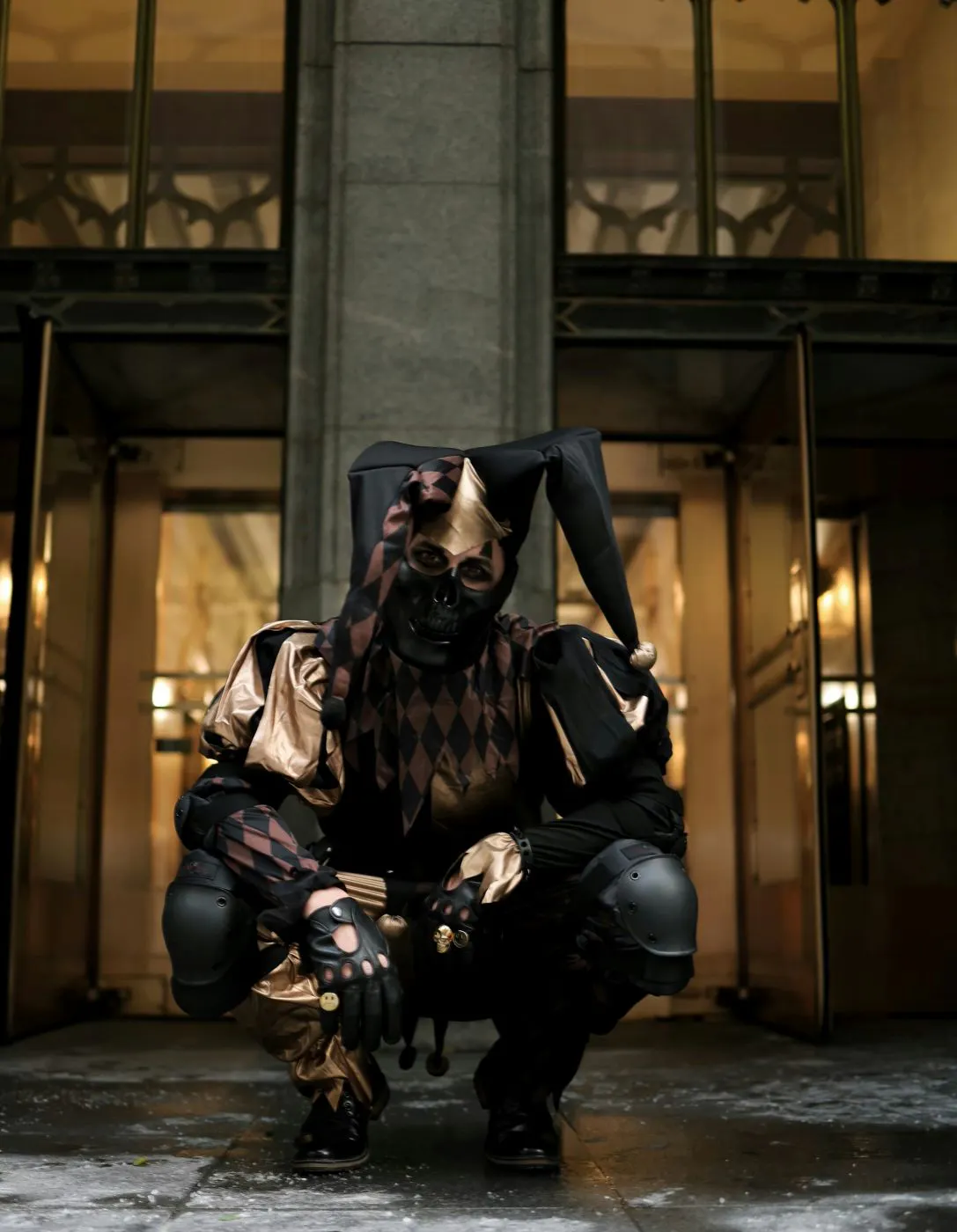
The fool was never just an entertainer. The court paid for a clown and got something stranger in return: a man whose job was to walk into the most powerful room in the kingdom and tell the most powerful person in the kingdom that he was being an idiot. In verse.
"And they have privilege to jest at the expense of fools, and to flout, scoff, gird, and gibe at the wisest…" adapted from Twelfth Night, I, v.
On Thursday, May 21, Stephen Colbert will tape his last episode of The Late Show. After thirty-three years on CBS, the franchise that David Letterman built is being shut down. Not handed off. Not reformatted. Shut down. The number-one show in late night, the number one show, is being walked out the back door, and Colbert himself has pointed out he may be the first host of a first-place program to ever be canceled.
The official line is that it was a financial decision.
The unofficial line is that Colbert called his parent company’s settlement with the President a "big fat bribe" on air, and three days later, the show was dead.
A few weeks after that, Jimmy Kimmel got suspended by ABC for what he said about the Charlie Kirk assassination. He’s back now, but the warning shot landed exactly where it was supposed to. Late-night hosts have started doing podcasts together. Calling each other on air. Wearing each other’s logos. They sound a lot like people who have realized they’re alone out there.
Which is to say: the fools are being fired.
We wrote a piece a while back arguing that the world needs more fools, that the medieval court fool was never the idiot the dictionary says he was, but the smartest person in the room, the one given license to tell the king he was wrong. That piece was about creative work. About brainstorms and brand meetings and the deadening word no.
This one is about what happens when the king decides he’s done with the joke.
The Fool’s Actual Job
The fool was never just an entertainer. The court paid for a clown and got something stranger in return: a man whose job was to walk into the most powerful room in the kingdom and tell the most powerful person in the kingdom that he was being an idiot. In verse. In song. In front of the entire court. With the queen watching.
The fool did this because the fool was the only one who could.
A general couldn’t. A general had armies. A general saying the king was wrong looked like the start of a coup. A bishop couldn’t. A bishop had a flock. A bishop saying the king was wrong looked like the start of a schism. A noble couldn’t, a wife couldn’t, a son couldn’t. Every other person in the room had something to gain or lose by their words, and the king knew it, and the king discounted them accordingly.
The fool had nothing. The fool wore bells. The fool was, by design, the least powerful person in the building. And that powerlessness was precisely what made the truth-telling possible. You can’t accuse a man with bells on his shoes of plotting against you. You can only laugh, or refuse to laugh, and either way, the room has now heard the thing that needed to be said.
This is the trick. The fool isn’t insulated from power. The fool is insulated from the appearance of seeking power. The king tolerates the joke because the joke can’t, in any straightforward sense, threaten him.
Until, of course, it can.

What Late-Night Actually Was
Late-night hosts are the closest thing modern American culture has had to court fools. Not stand-ups. Not pundits. Not journalists. Fools.
Think about what the job actually is. You sit behind a desk five nights a week, and you make jokes about the most powerful people in the country. You do it on a network owned by a corporation that has business before the federal government, basically every week of every year. You wear a suit because the suit is the motley, the costume that says I am here to be silly, the costume that gives you permission to say things that, said without the suit, would get you fired.
Carson did this. Letterman did this. Stewart did this on cable and changed how a generation read the news. Colbert did it twice, first in character as a parody of cable-news certainty, then out of character as himself, doing the same job in a different key. Kimmel does it. Meyers does it. Oliver does it on Sunday in a longer form.
And the thing that made it work, the thing that made it actually function as fooling instead of just performance, was the vulnerability the original piece talked about. These people were exposed. They had no army. They had bells on their shoes. The whole apparatus of the joke depended on the audience understanding that the fool was the powerless one and the target was the powerful one.
Which worked. For a long time. Until the powerful one figured out he didn’t actually have to tolerate the joke.
What Gets Killed When the Fool Gets Killed
Here is the part we want to be careful about, because this is where pieces like this usually slide into something we don’t want to write.
We are not saying Stephen Colbert is a martyr. We are not saying late-night television is a sacred institution. Late-night TV is a commercial product made by a corporation to sell ads against, and it has been in decline for years, and reasonable people can disagree about whether any of these shows are funny anymore. That’s all true.
What we’re saying is this: when a fool gets fired, the loss is not the fool’s. The loss is the room’s.
Because the fool’s function in the system was never about the fool. It was about creating a designated channel through which uncomfortable truths could enter the most powerful room in the kingdom without anyone having to risk their head to say it. That’s the whole architecture. The fool absorbs the risk so the truth can travel.
Remove the fool, and the truth doesn’t stop existing. It just stops being said out loud. Or it gets said by people without the protection of motley, by journalists who can be sued, by employees who can be fired, by citizens who can be doxxed. The truth becomes more dangerous to speak, which means it gets spoken less, which means the king hears it less, which means the king is more wrong more often, which is bad for the king and worse for everyone else.
This isn’t a partisan observation. It is mechanical. Every functioning court in human history has needed someone whose job was to tell the truth without being killed for it. When you take that channel away, the kingdom doesn’t get smarter. It gets dumber. And it gets dumber in a way the king cannot, by definition, perceive, because the channel for telling him so has just been removed.
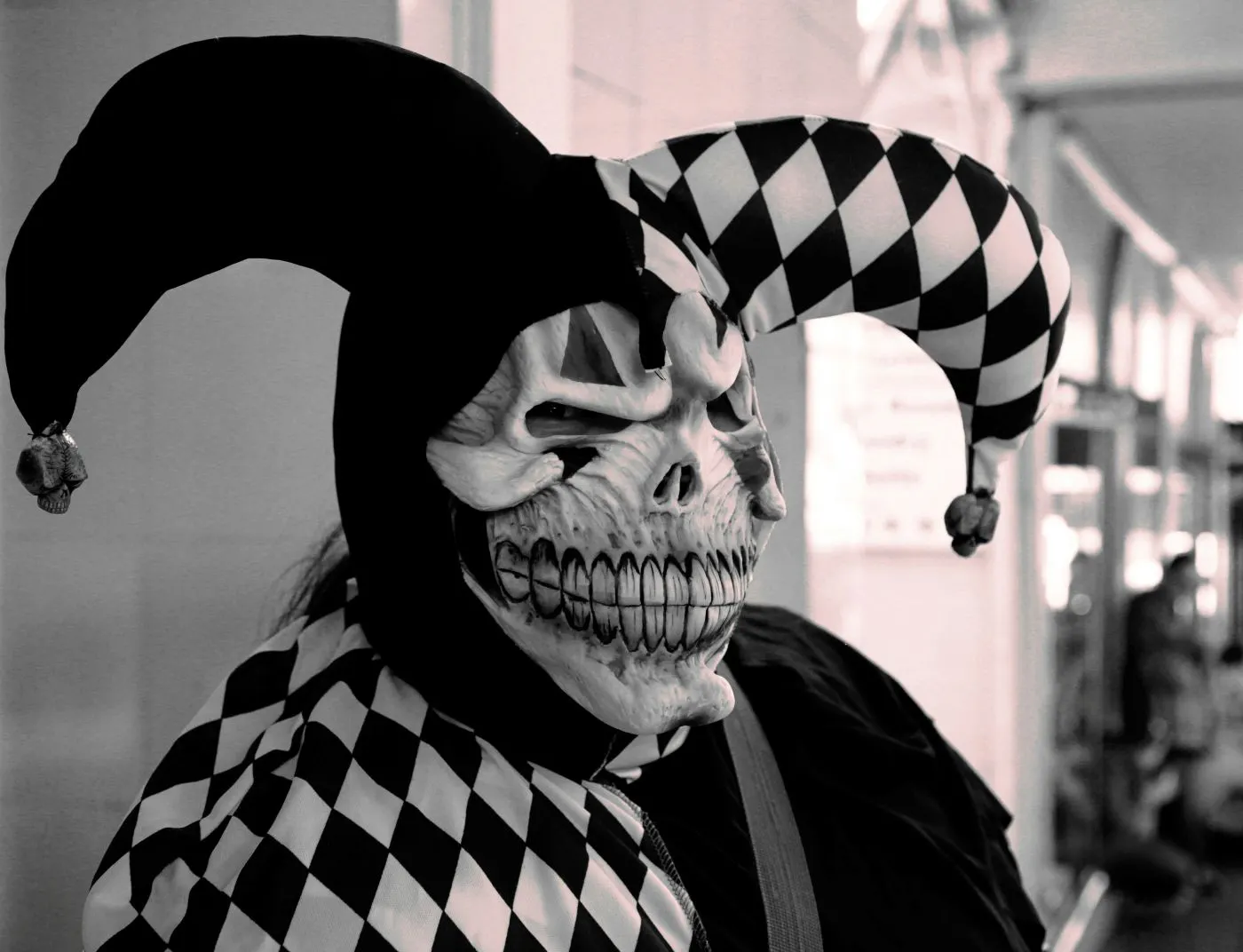
The Pre-Compliance Problem
Jon Stewart said something on The Daily Show last summer that has stayed with us. He said you wouldn’t find the reason Colbert was canceled in a smoking-gun email. You’d find it in fear and pre-compliance.
Pre-compliance. We had to sit with that one.
Pre-compliance is what happens when the king doesn’t actually have to issue the order.
Pre-compliance is when the courtiers, the lords, the merchants, the entire apparatus of the kingdom, look at where the king’s mood is headed and start trimming their own behavior to match it before being asked. The chilling effect without the chill. The censorship without the censor.
Pre-compliance is the most dangerous condition a creative culture can be in, because it leaves no fingerprints. No one was told to soften the joke or to kill the show. No one was told to stop saying the obvious thing. People just… did. Because they read the room. Because they had a merger to close, a contract to renew, or a family to feed and a mortgage to pay, and the bells on their shoes were starting to feel less like a license and more like a target.
And this is the part that should worry every creative person reading this, regardless of what side of any political line they sit on. Because pre-compliance doesn’t stay in late-night television. It spreads. Into newsrooms. Into agencies. Into brand teams. Into the room where someone is about to pitch the idea about the 125 elephants, and instead pitches the idea they think the client wants to hear, because they read the room, because they’re tired, because no one ever explicitly told them to play it safe, but they could feel which way the wind was blowing.
This is the besotted path of safe the original piece warned about. We just didn’t know, when we wrote it, that the path was about to get a lot wider.
Be a Fool Anyway
"This fellow is wise enough to play the fool, / And to do that well craves a kind of wit." Twelfth Night, III, i.
So here is what we want to say, and here is where the original piece comes roaring back.
Be a fool anyway.
Not because it’s safe. It isn’t, and it wasn’t ever, and the fools who got fired this year are evidence of that. Be a fool because the alternative, a culture where everyone trims, hedges, pre-complies, and serves up the dinner special, is so much worse than the risk of being one. Be a fool because the kingdom needs the channel open. Be a fool because if the people with the biggest platforms in the country are being pushed out of the role, then the role doesn’t go away. It just gets distributed. Across smaller stages. Across writers and creatives and founders and brand teams and the person in the meeting who is about to say what if we tried it the other way.
The fool’s job in the kingdom was never optional. It was structural. The kingdom needs it whether or not the king wants it. And if the official fools are being walked out the back door of the Ed Sullivan Theater, then the rest of us, every brand, every creative, every founder, every person who has ever sat in a meeting and felt the metallic thud of no close around an idea, has a little more of the work to do.
Put bells on your shoes. Say yes. Pitch the elephants. Tell the truth in the meeting. Tell the truth in the room. Tell the truth in the work.
The fools got fired this year. Which means we need more of them than ever.
Who’s with us?

The Takeaway
Same as it ever was. We are not advocating for stupidity, recklessness, or putting yourself in physical danger. We are not advocating for being mean, cruel, or punching down. The real fool punched up, always, and that distinction matters more now than it ever has. We are advocating for the courage to say the true thing in the room where the true thing needs to be said, in language that earns its way past the defenses of the people who need to hear it.
At ThoughtLab, we're advocating for the motley, the bells, and for the kind of creative culture where someone can pitch an idea without first running it through six layers of what will the king think.
Long live the fools. The ones we lost. The ones we still have. The ones who haven’t started yet. Especially those.