That’s one of the quieter lies addiction tells you. It teaches you to use competence as proof. It tells you that as long as you’re still showing up, still doing the work, still keeping your life moving, then nothing’s really wrong.
Addiction is no joke. No matter what form it takes, it can wreck your life. I know because I’m a recovering alcoholic who hasn’t had a drink in ten years. If you’re in recovery too, you know ten years doesn’t mean the story is over. Encouragement still matters. Understanding still matters. Every bit of reinforcement helps. Addiction is insidious. It lies to you. It makes destructive things feel necessary. And one of the hardest parts about addiction is that people often only recognize it when the damage looks obvious.
Alcohol is easy for people to understand. Drugs are easy for people to understand. But addiction doesn’t only attach itself to things that look dangerous from a distance. It can also hide inside behaviors that seem normal, productive, even healthy. Take working out. Loving exercise is one thing. Structuring your life around it because you enjoy it, feel better, and want to stay healthy is not the same as needing it so badly that missing one day makes you anxious, pushes you to ignore pain, and starts costing you relationships. That’s the shift. Something good stops being a choice and starts feeling like a command.
That difference matters because it helps explain something a lot of people still struggle to take seriously: social media addiction.
I was thinking about this while reading about the lawsuit against Meta and Google. The case centers on whether social platforms can be held accountable for designing experiences that pull people in, keep them there, and contribute to real harm. What struck me wasn’t just the legal argument. It was how familiar the logic felt. If you’ve lived with addiction, you learn something important. The object changes. The mechanism doesn’t.
Functioning is not the same as living
For a long time, I told myself I didn’t have a problem because I was still functioning. I never drank before an audition, a rehearsal, or a shoot day. I was never late. I was never hungover at work. I was never drunk on set, onstage, or on air. From the outside, I looked fine. More than fine, really. Responsible. Reliable. In control.
That’s one of the quieter lies addiction tells you. It teaches you to use competence as proof. It tells you that as long as you’re still showing up, still doing the work, still keeping your life moving, then nothing’s really wrong. It gives you such a dramatic idea of what damage looks like that anything short of collapse starts to seem acceptable.
But functioning isn’t the same as living. Never was, never will be.
What I couldn’t see then was how much of my inner life had already been handed over. Even when I was doing what I needed to do, my mind was somewhere else. A huge amount of my mental energy was going toward when I’d next be free to drink, what I’d drink, how I’d get it, whether I’d go out for it or just go home to the bottles waiting in my apartment. That was the real occupation of my mind. Everything else had to fight for what was left.
And when that much of your attention is wrapped up in the anticipation of escape, you’re not really present for your own life. You may be there physically. You may be doing the work. You may be saying the right thing at the right time and hitting every mark. But some central part of you is already gone. Your body’s in the room. Your mind’s on the clock.
That’s one of the big things people miss about addiction. They think the problem starts when life visibly falls apart. They look for missed appointments, public mess, and obvious ruin. Sometimes that comes. Sometimes it comes fast. But a lot of the time, addiction starts doing its real damage much earlier and much more quietly. It steals focus, narrows your world, and makes your life smaller before it makes it look broken.
That was true for me. Alcohol didn’t blow up my life in one dramatic burst. It slowly reorganized it. It changed what I prioritized, what I avoided, and how much of me was actually available to the people, the work, and the relationships in front of me. Even before the consequences looked dramatic, the cost was already there. I was living in a reduced state and calling it fine.
That’s why the phrase functioning alcoholic can be so misleading. It almost sounds reassuring, as if the word functioning somehow takes the edge off the word alcoholic. Like competence cancels out compulsion. It doesn’t. It just means the damage is easier to hide, excuse, and overlook. Sometimes it’s easier for you to miss too.
The truth is simple and hard. A person can be highly functional and deeply unwell. A person can be productive, punctual, talented, outwardly steady, and still be giving an addiction the best part of their attention. That doesn’t make the addiction less real. In some ways, it makes it harder to confront, because the absence of obvious collapse gives you endless reasons to postpone the truth.
That was the trap. Not disaster, but delay. Not the spectacular crash, but the quiet permission to keep going. And that’s part of why addiction can be so hard to recognize in other forms. If we’ve been taught to only notice it once life becomes visibly unmanageable, we’ll miss the earlier signs. We’ll miss the shrinking freedom, the internal dependency, the way a person’s attention and emotional life can start revolving around something long before the outside world decides it counts as a problem.
That blindness matters. It matters in private life and in culture. Because once you understand that addiction doesn’t always announce itself with chaos, you start to see how easily it can hide inside ordinary routines, accepted habits, and systems that look harmless from the outside.
People only easily recognize the addictions they understand
One of the stranger things about addiction is how quickly people believe in the ones they already understand and how slowly they recognize the ones they don’t. Most people don’t need alcohol explained to them. They get it. They know what it looks like when drinking starts running someone’s life. Same with drugs. The danger is already built into the public story. People know what they’re supposed to notice there, so they notice it faster.
But once addiction shows up in a form that looks ordinary, useful, or socially acceptable, people get weird about it. They minimize it. They joke about it. They treat it like bad discipline or a bad habit instead of asking whether something deeper is going on.
I had that reaction myself when I started reading about social media addiction. My first thought was, how could anyone be addicted to that? To me, social media has always felt hostile. Loud, negative, brain-frying, exhausting. I’ve never looked at it and thought, yes, here’s something I want more of in my life. So the idea of being addicted to it didn’t land naturally for me at first. Then I caught myself.
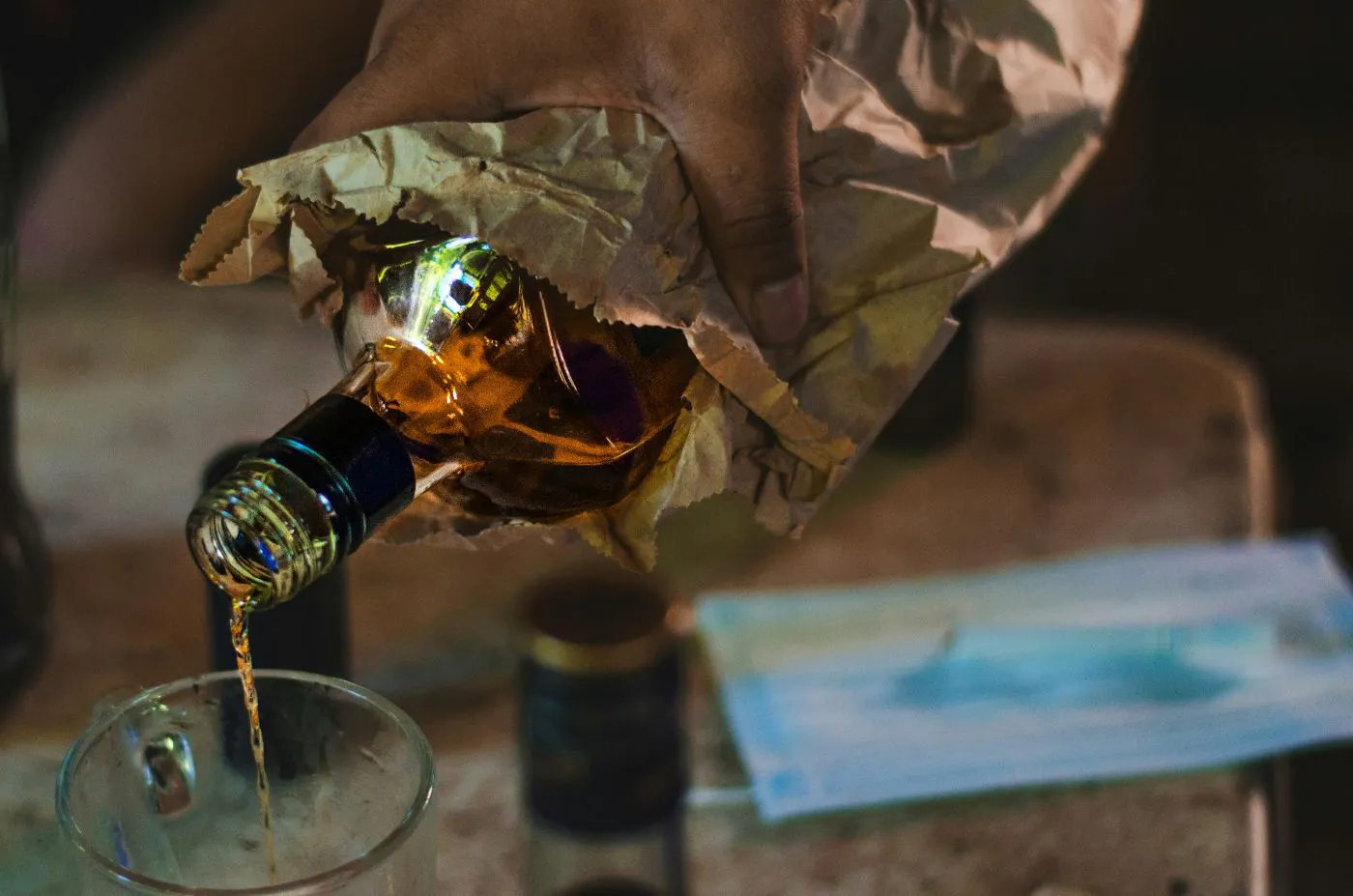
Because I know better than that. The fact that I don’t feel the pull of a thing doesn’t mean the pull isn’t real. There are people who can have one drink with dinner and forget the bottle exists. Good for them. Truly. That was never my relationship with alcohol. To me, bourbon was glorious. It felt like relief, escape, reward, anesthesia, and celebration all at once. Someone else could take a sip and think, how could anyone get addicted to that? I could wonder how anyone could possibly stop.
That’s the part people miss. We tend to assume our own instincts are universal. If something doesn’t hook us, we assume it shouldn’t hook anyone. If we can put it down, we assume everyone else can do the same. But addiction doesn’t care about that logic. It doesn’t ask whether the thing makes sense to outsiders. It only asks whether it’s found the right opening in the right person at the right time.
And once it does, the object almost matters less than people think. What matters is the mechanism. The craving. The ritual. The relief. The dependency. The way something starts as a pleasure or comfort and slowly becomes something you organize your life around. That’s why I don’t think the most useful question is "How could anyone get addicted to social media?" The more honest question is, why are we so surprised when they do?
These platforms are built to be returned to. They offer stimulation, distraction, validation, novelty, outrage, connection, comparison, and escape, sometimes all in the span of a few minutes. They fit into every dead space in a day. They’re always there. They’re socially normalized. In a lot of cases, they’re professionally expected. That doesn’t automatically make them addictive for everyone. But it does make them the kind of thing addiction can attach itself to very easily.
And because they don’t look like the addictions we were taught to fear, people are slower to take the harm seriously. If somebody’s drinking alone every night, people worry. If somebody’s checking their phone a hundred times a day, losing focus, sleeping badly, feeling worse, and getting twitchy the second they’re away from the feed, that still gets brushed off as modern life.
Maybe that’s part of the problem. Social media addiction doesn’t always look dramatic. It can look productive. It can look connected. It can look like staying informed, building a brand, keeping up, promoting your work, responding to messages, being reachable, and staying engaged. From the outside, it can look like participation. From the inside, it can still feel like compulsion.
And that’s where this starts to matter more than people want to admit. Because the addictions that do the most cultural damage are often the ones we’ve decided look normal.
What social media addiction actually looks like
This is where people can get a little slippery, because the second you start talking about social media addiction, somebody says, well, everyone’s on their phone. Which is true. Everyone is. That’s part of what makes this hard to talk about clearly. Heavy use and addiction aren’t automatically the same thing. Liking something isn’t the same as being trapped by it. Using it a lot isn’t the same as losing control of your relationship to it.
It’s probably important for me to say plainly here that I don’t think social media is evil, and I don’t think the answer is to strip it away from everybody or hand every detail of it over to the government. I don’t think that any more than I think alcohol is evil or that the answer to alcoholism is prohibition. My weakness was not a reason to punish everybody else. There are millions of people who can have a drink, enjoy it, and move on with their lives. There’s no reason they should lose that just because I couldn’t handle my liquor.
Same here. The fact that some people can use social media without being consumed by it matters. It should matter. Not every user is addicted. Not every platform experience is destructive. Not every bad habit needs to turn into a moral panic. But none of that changes the fact that addiction is still real when it happens, and real harm is still harm even when the thing causing it is normal, legal, and woven into daily life. The difference, at least to me, has to do with freedom.
Can you put it down without feeling pulled back almost immediately? Can you be away from it without getting itchy, anxious, or weirdly unsettled? Can you go through your day without needing that hit of distraction, validation, stimulation, outrage, connection, or whatever your particular version is? Or has it started running in the background of your mind all the time, calling to you like a jar of chocolate chip cookies, breaking your attention into little pieces, making actual presence feel harder and harder to hold onto. Making you buy inhuman amounts of milk. That’s where it starts to look familiar.
Because addiction doesn’t always announce itself with some giant dramatic moment. A lot of the time, it shows up as compulsion disguised as routine. You check your phone without thinking. Then again, a minute later. Then, while someone’s talking to you. Then, in the middle of work. Then, while watching something. Then right before bed. Then, when you wake up. Then, in the strange dead zones of the day when nothing much is happening, your own mind might otherwise have a chance to breathe.
And after a while, it’s not even about enjoyment anymore. That’s another tell. You’re not necessarily having a good time. You may not even like what you’re seeing. You may feel worse after being on it. More agitated, distracted, envious, and depleted. But you still go back. That’s the piece people tend to miss. They assume addiction always looks like pleasure. A lot of the time, it looks like repetition in spite of the fact that the thing isn’t even giving you much anymore.
That feels important here because social media can do so many things at once. It can distract you, flatter you, or numb you out. It can make you angry and briefly connected. It can make you feel left out, but also feel seen. It can make you feel invisible or give you a little spike of novelty when your day feels flat. It can give you something to do instead of sitting quietly with yourself. That’s a powerful mix.
And because it’s woven into daily life, the consequences are easier to wave away. You’re a little more distracted than you used to be. A little less able to read, rest, or focus. A little less present with people. A little more fragmented. A little more dependent on being interrupted. A little more uncomfortable with silence. None of that sounds as dramatic as somebody drinking themselves into oblivion. But quieter damage is still damage.
I think that’s why the language of control and flexibility matters so much. Can you choose, or do you just obey? Can you step away, or does stepping away make you feel off? Can you let a moment stay empty, or do you have to fill it immediately? Those questions tell you a lot.
Because once something starts colonizing every spare second, it’s not just taking your time. It’s changing your inner life, training your attention, reshaping your tolerance for boredom, your relationship to silence, and your ability to stay with one thing long enough for depth to happen. And that has consequences far beyond the feed.
That’s why I don’t think social media addiction is some soft or exaggerated idea people invented to sound alarmed about technology. I think it’s often a real pattern of dependency that’s harder to see because it’s so normalized, so portable, and so thoroughly built into modern life.
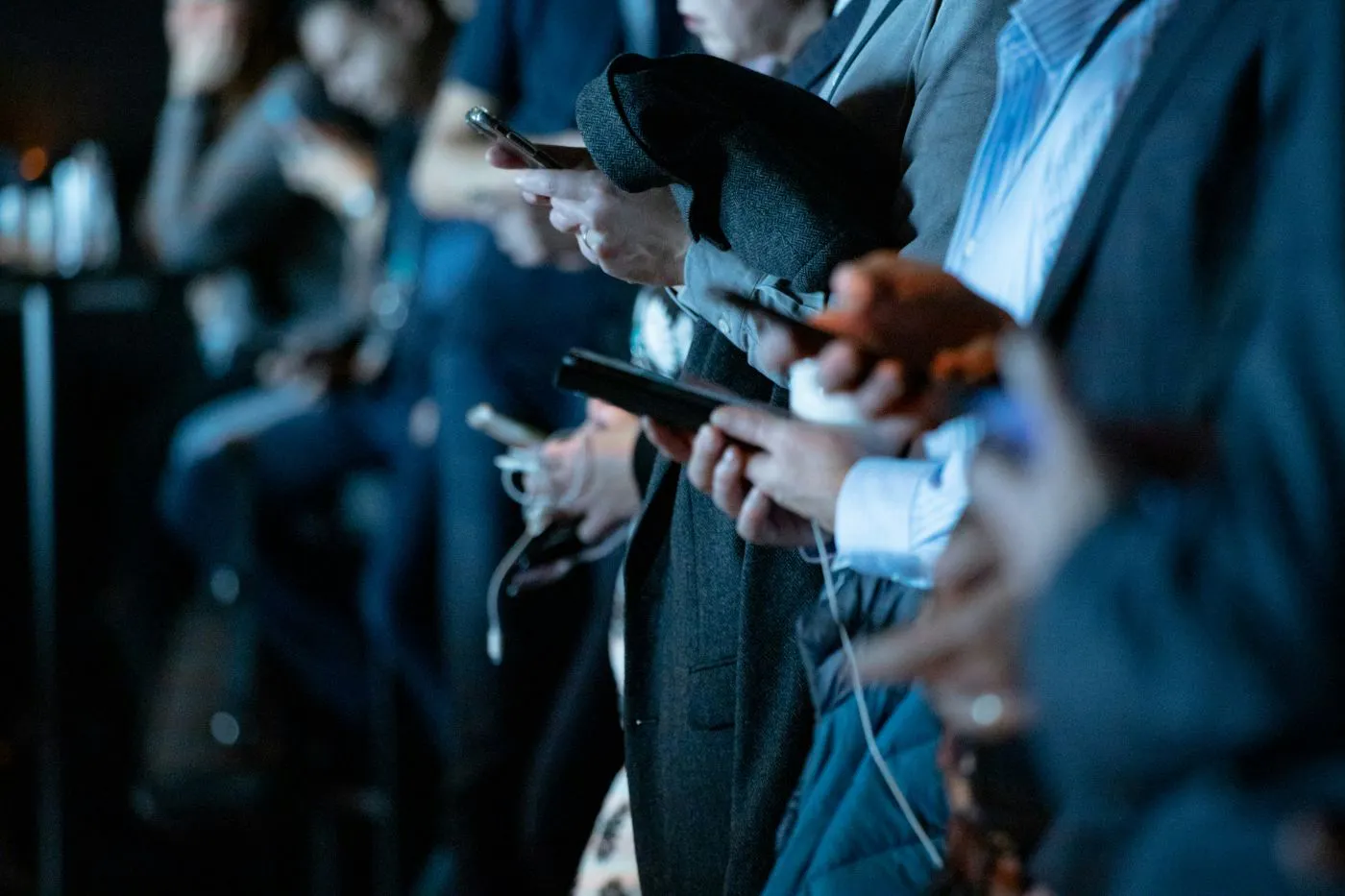
The old picture of addiction is a person alone with a bottle. The newer picture might be of a person surrounded by everyone, yet still not fully there, because some part of their attention is always being pulled elsewhere. And that, to me, is still addiction territory.
Why social media is especially hard to see clearly
Part of what makes social media addiction so hard to talk about is that the thing itself is woven into ordinary life. Alcohol, at least, still carries a visible warning label in people’s minds. Same with drugs. There’s already a story there. People know those things can go bad. They know excess has consequences. They know addiction is part of the territory.
Social media doesn’t come with that same built-in suspicion. It comes wrapped in normal life. It’s where people talk to friends, follow the news, promote their work, share their lives, watch clips, kill time, flirt, argue, joke around, post pictures of their dogs, and keep one eye on the world while pretending they’re just checking one thing. It doesn’t present itself as a danger. It presents itself as participation. That makes a difference.
It’s harder to spot a problem when the behavior looks exactly like what everyone else is doing. If someone is drinking bourbon alone every night, most people will clock that as possible trouble. If someone is on their phone all day, bouncing from app to app, checking notifications, losing focus every ten seconds, and feeling a low-grade panic whenever they’re away from it, that can still pass for normal life now. In some circles, it practically is normal life. That’s part of what makes it slippery. It hides in plain sight.
It also gets cover from usefulness. Social media isn’t just entertainment. For a lot of people, it’s professional. It’s how they network, market themselves, stay visible, promote projects, maintain contacts, and avoid disappearing. That usefulness gives it a kind of protective camouflage. The more necessary something seems, the harder it is to question the hold it has on you.
And then there’s the fact that it’s not always making you feel bad in one obvious way. It can feel good, useful, distracting, or energizing, yet still somehow keep you there. It can be the place where you laugh, compare, get attention, or where you feel ignored. The place where you learn something, and the place where your brain turns into a room full of fire alarms. That mix makes it harder to pin down. It doesn’t behave like one thing. It behaves like a delivery system for whatever your nervous system is most likely to respond to.
And because of that, people tend to misread the problem. They think that if something is useful, it can’t also be harmful. If it’s normal, it can’t also be addictive. If everybody’s doing it, then maybe nobody should make too big a deal out of it. But that’s never been a very good standard. Plenty of destructive things become easier to ignore once enough people are doing them together.
I also think social media gets protected by the fact that its damage often looks soft at first. Not soft in reality, but soft in appearance. You’re distracted, restless, fragmented, or less able to sit still. You’re less able to read deeply, listen well, or stay with one thought long enough for it to become anything interesting. You feel pulled apart all day. Your attention gets thinner. Your moods get more reactive. Your sense of self starts leaning a little too hard on response, feedback, visibility, and affirmation. None of that looks as dramatic as someone passed out drunk on a floor. But it can still hollow out your life in its own way.
And maybe that’s the bigger problem. Social media addiction often doesn’t look like collapse. It looks like erosion. A little less focus, stillness, and tolerance for boredom. Less real presence, and less ability to be where you are while you’re there.
That kind of damage is easy to dismiss because it arrives in fragments. It doesn’t always announce itself as a catastrophe. It just keeps taking small bites out of your attention, your peace, and your ability to live unbroken.
That’s why I think so many people miss it, or at least miss it for a long time. They’re looking for the old picture of addiction. The public mess, obvious downfall, or the flaming wreckage. But some addictions don’t come at you with that kind of theater. Some just slowly train you to be somewhere else all the time. And when that happens at scale, when millions of people are living in that low-level state of tugged-apart attention and calling it normal, it stops being just a private problem. It starts becoming a cultural one.
Why the Meta and Google lawsuit matters
What makes this lawsuit matter isn’t just the verdict itself. It’s what the verdict suggests about where the culture is starting to move. For a long time, a lot of the conversation around social media harm has lived in that vague space where everybody sort of knows something is off, but nobody seems especially eager to name it too clearly. Parents worry. Teachers worry. People talk about anxiety, distraction, depression, comparison, isolation, and attention spans turning to dust. But even with all that, there’s still been a strange reluctance to say that maybe these platforms aren’t just popular. Maybe some of them are built in ways that make dependency more likely. That’s why this case feels important to me. It pushes the conversation out of the realm of private suspicion and into public accountability.
And that’s a big shift.
Because once a case like this gets taken seriously in court, once a jury is willing to look at a platform's design and ask whether it contributed to real harm, the whole frame starts to change. The question is no longer just, do people spend too much time on these apps. The question becomes, what exactly are these systems designed to do, and what happens when they do it very, very well? That’s the part that matters.
I don’t think this lawsuit matters because it proves every argument people have ever made about social media. It doesn’t. I don’t think it means every platform is equally harmful, or that every user is trapped, or that the whole thing should be smashed apart by sunrise tomorrow. It means something more specific than that, and in some ways more useful. It means the old defense, that this is all just harmless engagement and personal choice, is starting to crack.
Because if a product is deliberately built to keep people coming back, if it rewards compulsion, if it weakens stopping cues, if it feeds dependence while pretending to offer connection, then at some point we have to stop talking about it as though it were neutral.
That doesn’t mean people have no agency. Of course they do. I had agency when I drank. I also had an addiction. Those two things can exist at the same time. Personal responsibility is real. So is design. So is vulnerability. So is exploitation. The fact that a person makes choices does not magically erase the reality that some systems are built to lean hard on human weakness.
And that, to me, is where this starts becoming more than a legal story. It becomes a cultural one.
Because if we keep treating every destructive pattern as a purely private failure of discipline, we let the systems behind those patterns off the hook. We act as though the only thing worth examining is the user. Not the architecture. Not the incentives, the design choices, the business model that benefits when people stay pulled in, overstimulated, emotionally reactive, and unable to stop.
That’s why this case matters. It asks whether the design itself belongs in the conversation. It asks whether the people building these platforms get to shrug and say, well, nobody forced anyone to log in. It asks whether a system can be profitable and normalized while still doing real damage at scale. And honestly, I think that’s overdue.
Because one of the smartest tricks harmful systems ever pull is convincing people that the harm is too diffuse to name. Too ordinary to challenge. Too wrapped up in daily life to question. This lawsuit doesn’t settle every argument. It doesn’t end the debate. But it does make one thing harder to ignore. More and more, the question is no longer whether social media can be harmful in an addictive way. The question is how long we plan to keep acting surprised by it.
The responsibility question
This is the point where people can get a little twitchy, because the second you start talking about responsibility, somebody hears control. Somebody hears censorship. Somebody hears the government kicking down the door and replacing every app with a pamphlet. That’s not what I mean, and it’s not what I’m arguing for.
Responsibility doesn’t mean treating grown adults like children. It doesn’t mean banning everything that can be misused. By that logic, we’d have to outlaw liquor stores, casinos, sugar, dating apps, and half the internet before lunch. That’s not serious thinking. And it’s not my point.
My point is simpler than that. If you build something designed to capture human attention, shape behavior, and keep people coming back, you have some responsibility for what that design does in the world. That shouldn’t be a radical statement. It should be obvious.
We already understand this in other areas of life. If a company makes a product that harms people at scale, we don’t usually shrug and say, well, nobody forced them to buy it. We look at the product. We look at the design. We look at what the company knew, what it encouraged, what it ignored, and what it profited from. Somewhere along the way, social media got treated like it should be exempt from that kind of scrutiny, as if code were somehow morally weightless just because it lives on a screen.
It isn’t.
Design choices matter. Incentives matter. Friction matters. The absence of friction matters too. What gets amplified matters. What gets rewarded matters. If outrage keeps people engaged, and engagement drives profit, then pretending those outcomes are accidental starts to look a little silly.
And I don’t think this only lands on tech companies. It lands on all of us who work in any area related to persuasion, engagement, brand building, content, growth, product, and experience design. At some point, everybody in those worlds has to ask the same uncomfortable question. Are we helping people use something, or are we helping a system use them?
That’s not always an easy line to find. I get that. Every brand wants attention. Every company wants relevance. Everybody wants to be memorable, useful, sticky, and engaging. None of those goals is automatically sinister. But there’s a line somewhere between making something compelling and making it hard to leave. There’s a line between usefulness and dependency. Between resonance and compulsion. Between building a relationship and building a trap.
That line matters.
Because once a business starts depending on dysregulation, once it starts making more money when people are more compulsive, more reactive, less present, and less able to stop, then we’re not just talking about good product design anymore. We’re talking about a system that benefits from human weakness and has every incentive to deepen it.
That should bother people.
It should especially bother people now, because we’ve spent years talking about attention as though it were an endlessly harvestable resource, as though the human mind were just one more field to strip for yield. More clicks. More time spent. More return visits. More engagement. The language sounds clean. The effects often aren’t.
And this is where I think the whole conversation gets more honest. The question isn’t whether people should have agency. Of course they should. The question is whether companies should be allowed to pretend they bear none. Whether the people designing these systems get to benefit from compulsive use while acting shocked that compulsive use happened.
I don’t buy that anymore.
If you build a system that keeps finding the cracks in people, you don’t get to wash your hands of what comes through them.
That doesn’t mean every platform is malicious. It doesn’t mean every designer is a villain. It doesn’t mean every user is helpless. It just means responsibility has to exist in more than one place. The user matters. The system matters. The incentives matter. The people profiting from the behavior matter too.
And if we can’t say that plainly by now, then we’re probably still not being honest about the problem.
The Takeaway
I know what addiction feels like from the inside. I know what it is to build your day around the thing you keep insisting you still control. I know what it is to look functional from the outside while something else is quietly taking up far too much room on the inside. I lived that way for years.
And because I did, I want to be careful here.
I don’t blame anyone else for my alcoholism. I don’t blame bartenders. I don’t blame bars. I don’t blame restaurants. I don’t blame bourbon for existing. My addiction was mine. My recovery is mine too. There are millions of people who drink, enjoy it, and go on living their lives without it taking them over. They shouldn’t be punished because I couldn’t handle my liquor.
That’s how I feel about social media, too.
I don’t think it’s evil. I don’t think every platform is predatory in the same way. I don’t think the answer is panic, prohibition, or trying to regulate every inch of public life until it goes flat and joyless. That’s not what I mean.
What I do mean is simpler than that. We should be honest about what addiction is, how it works, and how easily it can hide inside things that look normal. We should be honest that something can be useful and still harmful. Popular and still damaging. Legal and still be built in ways that lean hard on people’s weak spots.
That’s why this feels like more than a story about social media to me. It feels like a wider question about the kinds of systems we build and what we ask people’s minds to absorb every day.
And to me, that’s where ThoughtLab comes in.
Because this isn’t just about platforms and lawsuits. It’s about design, experience, incentives, and about what happens when engagement becomes the highest good, and nobody wants to ask what that engagement is costing the people giving it. If you work in strategy, brand, digital experience, content, or product, that question belongs to you, too. Not in some abstract, hand-wavy way. In a real one.
What are we building people toward, rewarding, and what are we normalizing? And at what point does something built to attract attention start asking for too much of a person’s life in return?
I’ve been sober for ten years. I’m grateful for that. I’m proud of it. I also know addiction doesn’t always show up the way people expect it to. The object changes. The mechanism doesn’t. The more honest we are about that, the better chance we have of building a world that asks a little less from people’s weakest places.