I'm not arguing the game shouldn't exist. I'm noticing what it tells us about the moment this title landed. That a marketing team workshopped it and won. The world is in a mess. Everyone who is paying attention agrees on that much, even when they agree on nothing else. And in that mess, the products that travel are often the products that name the mess as the feature.
I sit and talk into a small recorder, which I have always done when it's late at night, and I don't feel like putting pen to paper. Right now, it's a Plaud. Most of what I record is fine, the kind of thing that disappears if you don't catch it.
The other day I caught this.
A commercial came on for a video game. Diablo IV: Lord of Hatred. That's the actual name. There was an earlier one called Vessel of Hatred. I know the obvious argument is about games and kids and violence, and I don't really want to have that argument. It's been litigated for forty years and exhausted everyone. What stayed with me was smaller and stranger.
The product is called Hatred.
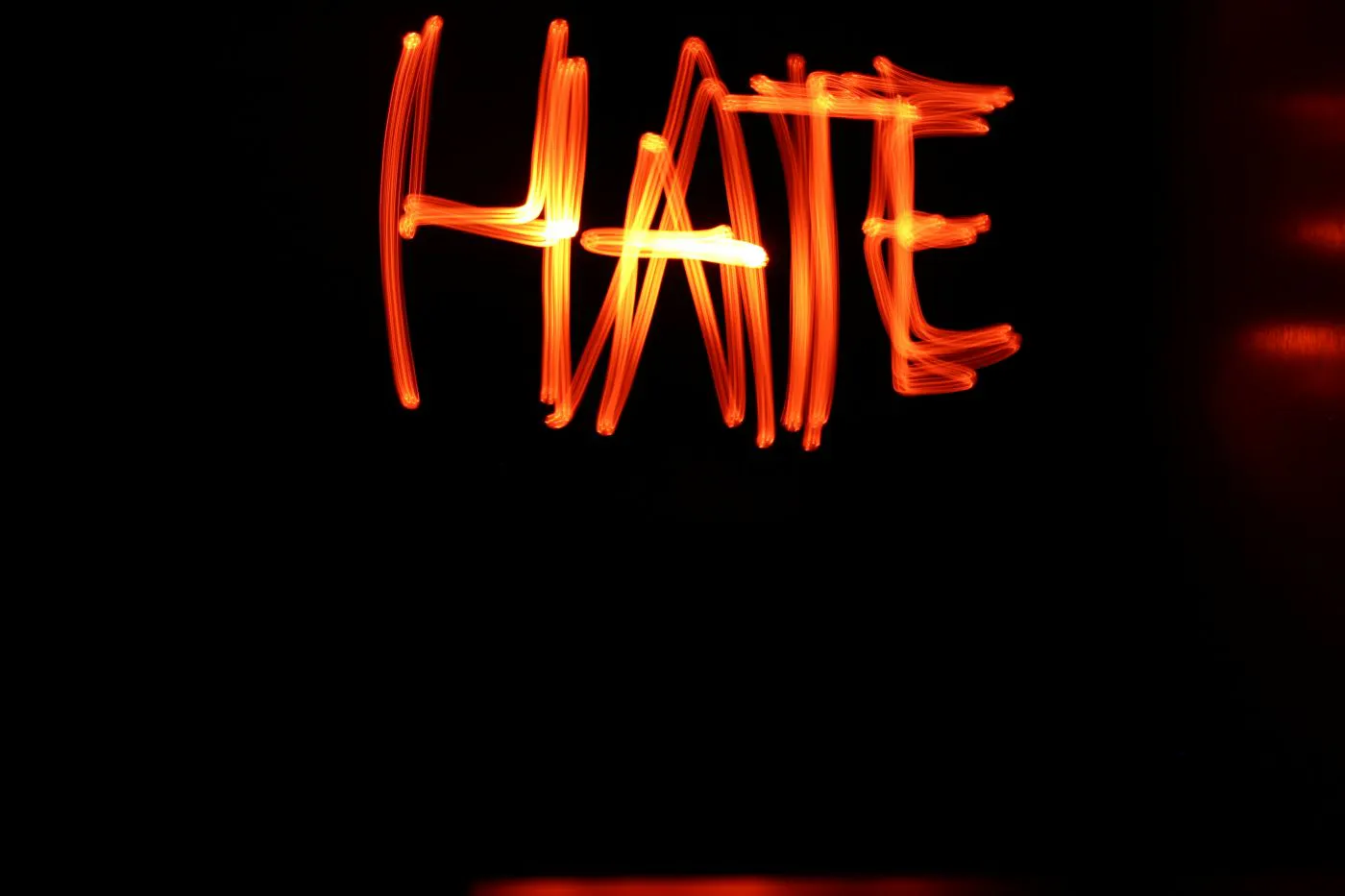
Not "the villain in the game is hatred." Not "the game explores themes of hatred." The expansion is named hatred. Hatred is the brand. Hatred is what you buy. The marketing department sat in a room and decided that the word most likely to land hardest on a TV screen during a commercial break was hatred.
And they were probably right.
Because I don't think this is a story about kids. I think it's a story about us.
Somewhere along the way, hatred stopped being a thing we were embarrassed to sell. It became a thing that sells. Not as a warning. Not as a cautionary tale. As the headline. As the offer. The product equivalent of writing YES, HATRED, THAT ONE on the box and watching the box move.
I'm not arguing the game shouldn't exist. I'm noticing what it tells us about the moment this title landed. That a marketing team workshopped it and won. The world is in a mess. Everyone who is paying attention agrees on that much, even when they agree on nothing else. And in that mess, the products that travel are often the products that name the mess as the feature.
I noticed it because I'm old. That's not a flex because at my age, flexing hurts, and it's not an apology. It's just true that people inside a culture stop smelling the house they live in, and visitors notice the smell immediately. I'm a visitor now. I get to notice.
THE WORD ON THE BOX
The thing about a name is that it always gives something away. It tells you what a brand thinks will get through, what kind of signal it believes people are ready to receive, and how much work it expects one word to do. A name can be gentle, clever, blunt, or trying a little too hard, but it's never nothing.
That's what stayed with me about hatred being used this way. Not buried inside the story, or held at a distance, or treated as dangerous, corrosive, sad, human, ugly. Put right there on the box instead, polished up and made sellable. The stranger thing is that the word doesn't seem to need much explaining anymore. It arrives already understood.
A brand name has a job. It has to carry mood, promise, category, audience, and energy. It has to move fast because people don’t stop to study most things. They glance, they feel something, they decide whether to lean in or keep moving. So when a product leads with a word like hatred, it's not an accident. It's a bet on recognition. It assumes the audience will know what to do with it, and that the word will carry enough heat to pull the eye.
That's the part that feels different. Hatred is not being smuggled in under the guise of metaphor. It's not dressed up as conflict or darkness or revenge, some cleaner and safer version of the same appetite. It's standing in the front window. And maybe that's where the question begins. Not whether a brand is allowed to use the word, of course it is, but what happens when the hardest word in the room becomes one of the easiest to sell.

THIS IS NOT REALLY ABOUT VIDEO GAMES
The easy version of this piece would be to turn it into a complaint about video games. I don't want to do that. For one thing, I don't know enough about the game to make that argument honestly. For another, the broader argument has been going on forever, and most people in it already know what they think.
What caught me was the marketing instinct. The commercial confidence of it. The sense that hatred is no longer too much, too dark, too blunt, or too ugly to carry the offer. It can sit there in the title and do its job.
That feels like the more useful thing to notice. Not because this one game explains anything on its own, but because it belongs to a larger weather system. We are surrounded by products, headlines, shows, campaigns, platforms, and personalities that understand how well anger travels. They know resentment has velocity, conflict gets shared, and the darker feelings are often easier to activate than the better ones.
This is not about video games. It's about what the culture has made available to sell. It's about the emotional inventory sitting on the shelf now. And hatred, apparently, is in stock.
BRANDS DON'T INVENT THE APPETITE. THEY READ IT.
Brands are not innocent in all this, but they're rarely magicians either. They don't create desire from a blank page. They listen for it. They study where the attention goes, which words carry voltage, which emotions make people pause long enough to care. Then they build around what they find.
A name like "Lord of Hatred" is not just a creative choice. It is a reading of the room. Someone believed the word would work because the culture had already made room for it to work.
That's the harder truth. Hatred sells because some version of it is already moving through the bloodstream. Not always in the obvious ways. It can show up as contempt, tribal comfort, or the little private pleasure of seeing the people we dislike get what we think they deserve. The Germans have a word for it: Schadenfreude, which means exactly that, pleasure from someone else’s pain. Those wacky, wacky Germans.
That's not a gaming problem. That's not even just a marketing problem. That's a human problem with a media plan.
Marketing is very good at finding the part of us that is already awake. It can put a handle on a feeling and make the vague thing visible. Once that feeling has a name, a campaign, and a little universe around it, it becomes easier to carry around — and harder to put down.
That may be the part we don't like to admit. The market doesn't only sell us what we need. It sells us what we're willing to recognize in ourselves. Hatred would not make it onto the box if everyone recoiled from it. It gets there because enough people understand the signal, even if they would never describe themselves that way.
THE MOMENT TEACHES THE MARKETER
This is where naming gets serious. A name is not just a label you stick on something after the real work is done. It is part of the work. It tells people where to look, what to feel, and what kind of emotional contract they are entering.
That does not mean every name has to be gentle or morally spotless. Nobody wants a culture where every product sounds like herbal tea for nervous accountants. There is room for names that are sharp, dark, or unsettling. The issue is not whether a brand can use difficult language. The issue is whether anyone in the room stops long enough to ask what the language is doing.
That question matters because marketing has a way of making things feel normal. Put a word in the right typeface, repeat it enough, wrap it in music and motion, and the word starts to change temperature. After a while, it no longer arrives as a shock. It becomes part of the room.
At ThoughtLab, we spend a lot of time on the hidden work language does before anyone buys, shares, or repeats. The best branding does not just grab attention — it understands the cost of the attention it grabs. A name can do its job and still be cheap. It can be memorable for the wrong reason. Those aren't always popular things to say in a meeting where everyone wants the sharpest hook. But they should probably be said more often.
THE LINE QUESTION
The question is not whether a brand is allowed to sell something. Most of the time, the answer is yes. A brand can sell darkness, conflict, or danger. It can push against good taste. It can live in the uglier parts of the imagination. That has always been part of art, entertainment, and commerce. The better question is whether every sellable feeling deserves to be sold as hard as we know how to sell it.
That's not a censorship argument. It's not a panic button. It's the question that seems to disappear when the room gets excited about a strong idea. A name can hit, a campaign can have teeth, and the audience can respond before anyone asks what everyone is actually nodding to.
Maybe that's the line. Not a rule written in permanent ink. Not a committee with clipboards deciding what words are allowed. Just a moment in the room where someone asks: are we amplifying something we actually want more of?
That question won't always kill the idea. It probably shouldn't. Dark ideas can be honest, and uncomfortable language can earn its place. But there is a difference between exploring a hard human feeling and turning that feeling into the cleanest hook in the room.
That difference matters. Not because brands are responsible for the whole moral condition of the planet — that would be a ridiculous burden to put on a naming meeting. But brands participate. They add weight. They make certain feelings easier to repeat. They help decide what starts to feel ordinary. And once something feels ordinary, it gets much harder to notice.
THE TAKEAWAY
Maybe the point is not that a video game used the word hatred. The point is that the word felt commercially useful enough to lead with, and most of us barely blinked.
That is what brands should pay attention to. A name can land and still normalize something while it lands. The strongest hook in the room can also be the cheapest one. Speed through the culture is not the same as worth.
At ThoughtLab, we believe language does work before anyone notices it working. A name can invite, sharpen, or sell. It can also make something ugly feel ordinary if enough craft is wrapped around it. That does not mean brands need to become timid. It means they need to become more awake.
Every brand is answering a question, whether it means to or not: what are we putting into the world, and what are we asking people to stop finding strange?
I'm not sure where the line is. I'm suspicious of anyone who claims they do. But I think there should be people in the room willing to ask whether a sellable thing is also a thing worth selling.
I'm going back to the Plaud. Something else will arrive.