This movement away from mystery and toward we need to know how it’s done has fed a weird style of advertising. You know the one where a stern and knowledgeable voice says, “Big hardware doesn’t want you to know about this,” and then there’s an ad for a hose or a water cooler. They’re claiming to expose the secret, a secret, some secret that some nameless, faceless group is hiding from the public, and now, late at night on basic cable, the answers are being given.
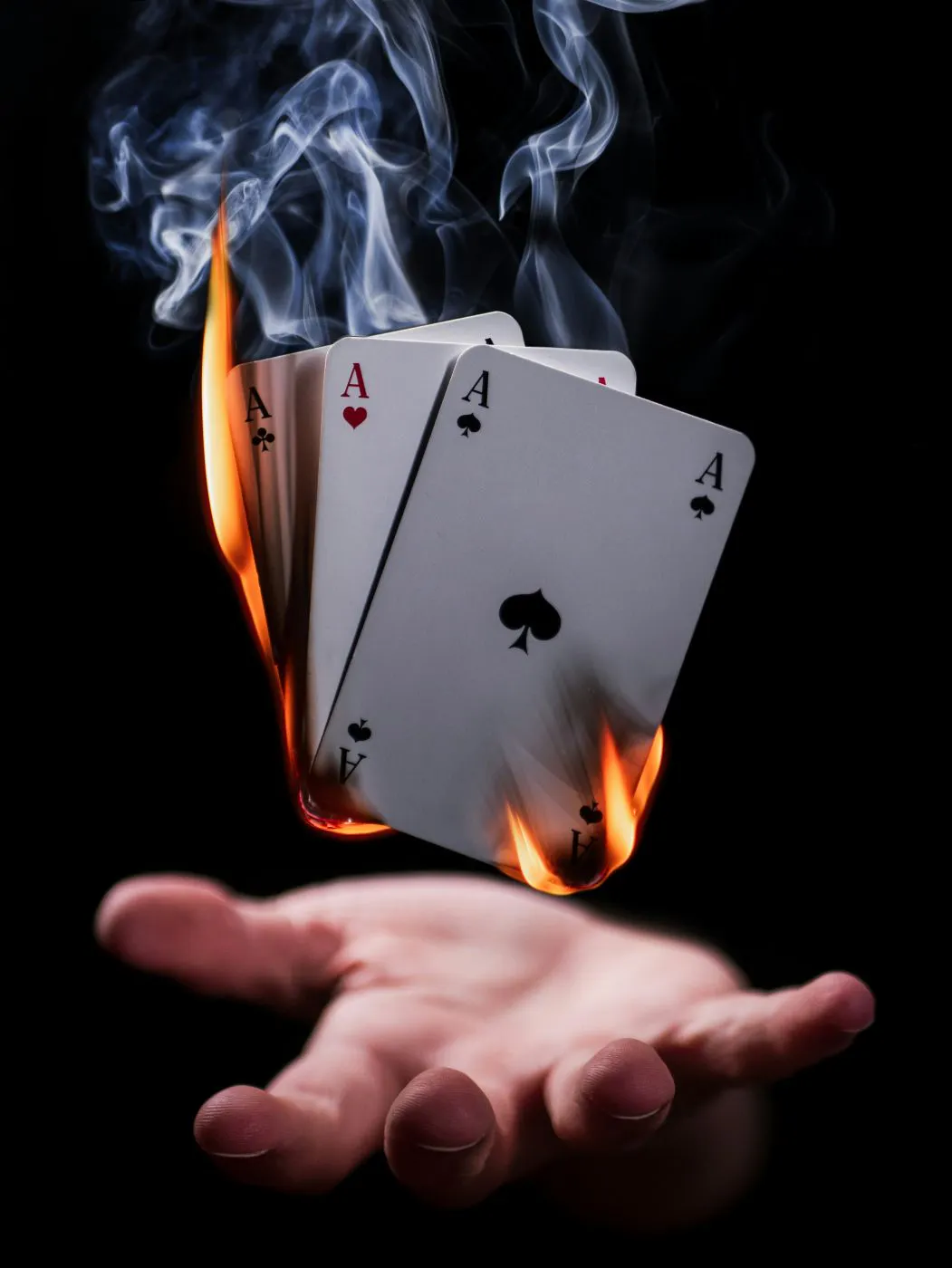
I recall saving up money from my job as a bagger at a grocery store, getting on the bus with some friends, heading to Beverly, Massachusetts, and walking to the Cabot Street Theater to see Le Grand David and His Own Spectacular Magic Company. The longest-running live stage magic show in one theater in history. It was spectacular. All your classic magic tricks: sawing a woman in half, the metamorphosis, one man is put in a bag, the bag is sealed with chains and locks, and he’s dropped into a chest. The chest is then chained and padlocked, and another man stands on top of the chest, pulls a curtain up around himself, drops it in two seconds, and the guy in the chest is now on top of the chest, and the guy in the bag in the chest is the guy who was on top. And it happened in the blink of an eye.
I have a friend who is a magician, and I used to go see this show with him. He knew how to do the illusions, but he still studied every moment like he was finding the secret to life. I loved the show: classic Auguste clowns, beautiful women, live music, and just the most mind-blowing illusions. My friend would say, “I know how to do that one,” but he’d never tell me, and I was so happy. One of my favorite moments in the show was when an older magician would come right to the lip of the stage wearing a cape. He’d take the cape off, spin it in the air, and pass it over the ground, and as he pulled it away, there was a bunny. It was the moment of pure magic to me. All the other illusions had boxes, ropes, and stuff. This was a man, a cape, and a bunny. I loved it.
Now, I could have asked my friend how it was done, and with enough hounding, he would have told me. I could probably look it up online. I mean, magicians have to learn how to do this stuff, so there must be information on it, right? I never did. The other stuff I could figure out if I thought about it enough, but the bunny and the cape, no idea, and I liked it that way. My friend said to me once, “Be careful. You can learn how all the tricks are done, but that will ruin the magic.” And he was right. For me, and for most of us, we may wonder, “How did he do that?” but we don’t really want to know. There’s an understanding between performer and audience. We each know there is a practical answer to how the woman levitates, but we let the moment go undiscovered so we can feel the magic. We want to believe for a few hours that the laws of physics can be broken, that a woman can fly, that a man can cut a woman in half and she’ll live. Or, even simpler, that a man with a cape can make bunnies appear out of thin air.
I’m thinking about this today because I fear there is a lack of magic in our lives. Maybe it’s not magic. Maybe it’s wonder. There is a lack of something that allows for magic and wonder to be part of our lives. This became crushingly clear when I read a BBC article saying that Banksy’s identity has been discovered. Following that, there were stories asking whether the person they identified is really Banksy, with more speculation and on and on. Instead of just appreciating his work, his cleverness, and the mystery around him, people had to know. They had to know who this guy is and how he does his work. They all wanted to know how the bunny appeared. And my question is, why?
Why do we need to know his identity? Why do we need to know how the bunny appears? To know is to, well, know, I guess, but in some situations, to know is also the end of it. Once you know the trick, why bother seeing the show? Once you know who Banksy is, he’s just a guy. The mystique of the guy who painted the revolutionary throwing a sandwich is just another graffiti artist. Part of what makes Banksy Banksy is the mystery. One day, a wall is just a wall, but overnight it’s transformed by the artist’s skill and vision into a political statement, a rallying point, a social commentary that’s speaking to a huge swath of the population. Knowing who he is actually diminishes the message, because now it’s about the man, not the art. So I ask again, why?
This movement away from mystery and toward we need to know how it’s done has fed a weird style of advertising. You know the one where a stern and knowledgeable voice says, “Big hardware doesn’t want you to know about this,” and then there’s an ad for a hose or a water cooler. They’re claiming to expose the secret, a secret, some secret that some nameless, faceless group is hiding from the public, and now, late at night on basic cable, the answers are being given. And we need those answers, right? But do we?
What Explanation Takes With It
We tend to assume explanation makes things better. More context, more access, more information. We talk about all of that like it’s automatically a gain, as if knowing how something works always deepens our experience of it. But that isn’t always true. Sometimes explanation enters the room, and something else leaves.
What leaves is often the part that made us care in the first place. Tension leaves. Anticipation leaves. That strange little gap between what we’ve seen and what we can account for leaves too, and that gap matters more than we admit. It’s often where wonder lives. Once everything gets reduced to process, identity, method, and mechanics, the experience changes. We may know more, but we feel less. We’re no longer inside the moment. We’re outside it, studying how it was built.
That’s true of magic, obviously, but it’s true of much more than magic. It happens in art. It happens in performance. It happens in culture. There are some things that want to be experienced before they’re dissected, and sometimes the dissection is the thing that drains them. You get the answer, sure, but the feeling that sent you searching in the first place starts to thin out.
Maybe that’s the trade we keep making without fully noticing it. We satisfy curiosity, but we flatten the experience. We get access, but lose awe. We get the mechanism, but lose the moment. And once that happens, it’s hard to recover what was alive in it before.
That’s the part I keep coming back to. Knowing is not always the same as seeing, and explanation is not always the same as understanding.
Clarity Is Not the Same as Exposure
None of this is an argument for vagueness, and it’s not an argument for hiding things that matter. People deserve honesty. They deserve clarity. If something affects trust, safety, money, or truth, then yes, say it plainly. Be clear. Be direct. Don’t hide behind mystique and call it depth.
But that’s not really what I’m talking about here. I’m talking about the strange modern belief that everything becomes better once it’s fully explained, fully exposed, fully dragged into the light. That belief sounds smart, maybe even virtuous, but it misses something basic about how people actually experience the world. Not every meaningful thing arrives as information. Some things arrive as feeling first. Some things work because they leave room. Room to wonder, room to interpret, room to lean in.
That’s the difference. Clarity helps us understand what something is. Overexposure can strip away how it feels. One creates orientation. The other can collapse tension. And tension, in the right places, isn’t a flaw. It’s part of the experience. It’s what keeps us engaged. It’s what gives certain things their charge.
You can see this all over the place now. The endless behind-the-scenes footage. The constant decoding. The insistence that every artist, every idea, every piece of work needs to come with a full explanation attached to it, as if the audience can’t be trusted to meet it halfway. As if the work itself isn’t enough. As if interpretation is somehow inferior to disclosure.
Maybe that’s what feels off. We’ve started treating total exposure as a kind of virtue, even in places where it leaves the experience thinner than it was before.
We’ve Turned Revelation Into a Reflex
Somewhere along the way, revelation stopped being an occasional pleasure and became a reflex. We don’t just encounter things now. We decode them. We explain them, expose them, reduce them, package them, and pass them around as if the highest form of engagement is to strip away whatever made the thing shimmer in the first place.
You can see it in the way people talk about artists, ideas, and even experiences now. Everything comes with a demand for the backstory, the process, the identity, the hidden meaning, the trick behind the trick. The work is no longer enough. It has to be opened up and accounted for. It has to be made legible from every angle, even if that legibility drains some of the life out of it.
That instinct has shaped advertising, too. So much of it now is built around the promise of revelation. The secret they don’t want you to know. The thing hiding in plain sight. The truth finally exposed. It’s all framed as access, as if access itself were the prize. But access is not the same thing as depth, and exposure is not the same thing as meaning. Sometimes it’s just more information wrapped in urgency.
What gets lost in all of this is the audience’s role in the experience. If everything is explained, there’s nothing left to feel your way toward. Nothing left to interpret. Nothing left to discover in your own time. The whole thing arrives already flattened, already solved, already dead on the table.
The Takeaway
Maybe that’s what I’m really arguing for here. Not secrecy. Not confusion. Just a little restraint. A little respect for the fact that not everything meaningful needs to be pulled apart the moment it appears.
We’ve gotten very used to the idea that more explanation is always better. More access, more context, more exposure, more reveal. But there are parts of life that don’t improve under that kind of light. They shrink. They lose air. They stop moving. What once felt alive starts to feel handled.
Maybe that’s because some things need space to work on us. A magic trick. A piece of art. A public mystery. Even a person. Not everything has to arrive with an answer attached to it. Not everything gets deeper once the mechanism is exposed. Sometimes the experience is the meaning. Sometimes the wonder is the point.
I still think about that bunny. Not because I solved it, and not because I ever wanted to. I think about it because for a moment it let me feel something clean and impossible, and I was smart enough, or lucky enough, to leave it alone.
Maybe we’d all be better off if we left a few more things alone. Not out of ignorance, but out of respect for what mystery makes possible.