

There was a time when brand impact was easier to see, or at least easier to understand. That doesn’t mean it was pure. It doesn’t mean every company has a golden heart beating underneath the sales report.
I remember the old Superman TV series. George Reeves in his gray costume with a dark cape. It was in black and white, so I didn’t know Superman wore red and blue until I looked at my first comic book. But there he was, jumping out windows, flying through the sky, landing right in the nick of time to defeat the bad guys, then giving his knowing wink to the camera when Lois Lane asked Clark Kent how he could have missed everything.
My favorite moment was at the top of the show, Superman in his famous pose, standing on top of the world while the announcer said, “Fighting for truth, justice, and the American way.” The American way was added during WWII and the Cold War, but truth and justice were always there. That was the spine of the thing.
There have been about seven major studio live-action versions of Superman. That’s not counting the TV series and made-for-TV movies. We’re not even getting into Justice League, animated Superman, or the thousands of comic book titles. Superman has been part of my life for a long time. He’s been part of a lot of lives. There probably aren’t many people on this planet, apart from those undiscovered or uncontacted tribes living on isolated islands, who don’t know about Superman.
Up, up, and away.
Why am I going on about Superman? Because he had a purpose. A clear goal in life. To fight for justice, to make truth something worth defending, and to have a positive impact on mankind.
In the original TV series, Superman, or Clark Kent, often delivered a moral at the end of the show. A smile, a quick look at the camera, and an important message about goodness, kindness, truth, and making the world a better place. All brought to you by Kellogg’s. Corn Flakes and Frosted Flakes, the perfect breakfast for your growing Superman and Supergirl.
It’s amazing when you think about it. Kellogg’s was so involved with that show that it had the studio tone down the violence after the first season, so the show would be more family-friendly. Even your morning breakfast bowl was doing its best to have a positive impact on the world.
Up, up, and away.
Superman and his ideals had an impact on us, so much so that they became part of the morning breakfast ritual. Flakes of corn in a pure white porcelain bowl. That’s America, or at least one version of it. Kellogg’s saw the appeal of Superman, and yes, the marketing bucks available, but we’ll overlook that for now. They promoted him. They wrapped themselves around him. They helped turn truth, justice, goodness, corn, and milk into one bright little breakfast universe.
The impact was clear and lasting. To this day, there are boxes of cornflakes on grocery shelves and many versions of Superman on the big and small screens.
Is that happening any longer? Are brands doing their best to have a positive impact on the world? If we’re no longer fighting for truth and justice, and feeding our kids wholesome flakes of corn, what are brands doing now to impact the world?

When impact was easy to recognize
There was a time when brand impact was easier to see, or at least easier to understand. That doesn’t mean it was pure. It doesn’t mean every company has a golden heart beating underneath the sales report. Most brands were still trying to sell us something, and some of them were selling things nobody needed with smiles bright enough to light a small airport. But the promise was clearer.
A brand stood next to an idea and said, this is what we believe people want to feel. Stronger. Safer. Cleaner. Happier. More capable. More at home in the world. Sometimes it was corny. Sometimes it was manipulative. Sometimes it was both at the exact same time, which is pretty much the history of advertising if we’re being honest. But you could usually see the shape of the thing.
Superman stood for truth and justice. Kellogg’s stood beside him with a bowl of cereal and said, in its own sugary little way, this belongs with goodness. This belongs with family. This belongs at the breakfast table before the day begins and the world starts asking too much of everybody.
We can laugh at that, and we probably should. There’s something wonderfully absurd about the idea that flakes of corn had joined the great moral project of civilization. But it worked because the connection was simple enough to feel. A kid watching Superman didn’t need a brand manifesto to understand what was being sold. The show had a moral. The cereal had a mascot. The message came wrapped in a cape, a smile, and enough milk to make the whole thing shine.
That kind of impact didn’t require much translation. It lived in the open. It was part of the product, the story, the ritual, the feeling around the thing.
And maybe that’s what feels different now. Not that brands used to be saints. They weren’t. Not even close. But their promises were often more direct. They didn’t always need to explain their purpose because they were busy performing it, however imperfectly, right in front of us.
You knew what world they were trying to create.
You might not believe in that world. You might not want it. You might roll your eyes at the clean kitchen, the happy children, the dad with his newspaper, the mother who apparently woke up in full makeup to pour cereal before sunrise. But at least there was a world there. A picture. A belief about what life could feel like if the brand did its job.
That’s what impact used to have, even at its most commercial. A visible promise.
Today, too many brands have replaced that visible promise with language. Big language. Careful language. Language that sounds important from a distance and disappears the second you try to hold it in your hand.
Then purpose became a department
Now every brand has a purpose. Every brand has values. Every brand has a mission statement sitting somewhere on its website, usually next to a photo of diverse, attractive people looking thoughtfully toward a future none of them seems to be responsible for building.
And listen, I’m not against purpose. I’m not against values. I’m not even against a company trying to do something useful beyond moving product from one place to another. That’s the part brands should be thinking about. The problem is that purpose has become so common, so polished, and so drained of risk that it often feels less like a belief and more like a room everyone is required to walk through before the campaign goes live.
The words are always warm. Empowering communities. Driving change. Creating a better future. Inspiring connection. Making a difference. They sound good, and maybe somewhere inside the company, they even mean something. But by the time they reach the outside world, they’ve been sanded down until there’s nothing left to catch on. No edge, no evidence, no real human pressure.
That’s what makes it hard to trust. Not because people are cynical about everything, though we’re certainly doing our best. It’s because we’ve seen too many brands wrap themselves in goodness without changing their behavior. We’ve seen purpose used as decoration, a tone, a campaign platform, something to make the annual report feel less lonely.
Superman didn’t need to explain that he cared about truth and justice for nine paragraphs under a stock photo. He showed up. He lifted the car. He stopped the bad guy. He helped the kid. Then Clark Kent smiled into the camera as if goodness were still a reasonable thing to expect from the world.
That’s the difference. Purpose can’t just be announced. It has to leave fingerprints. It has to show up somewhere people can feel it. In the product. In the service. In the way problems get solved. In the way customers are treated when something goes wrong. In the choices a brand makes when nobody’s clapping yet. Otherwise, it’s just a cape on a mannequin.

The problem isn’t selling. The problem is pretending.
We shouldn’t pretend Kellogg’s sponsored Superman because someone in Battle Creek woke up one morning, looked into the rising sun, and whispered, “The children need justice.” They wanted to sell cereal. Of course they did. That’s what companies do. They make things, sell things, look for attention, find the emotional doorway, and walk through it carrying a box with a rooster on the front. That doesn’t make the connection meaningless. It makes it advertising.
There’s always been a strange little marriage between commerce and belief. Brands borrow from the culture, the culture borrows back, and somewhere in the middle, a kid is sitting on the floor in pajamas watching Superman while eating cornflakes and learning, in some half-formed way, that goodness is supposed to win before school starts. That’s not nothing.
The selling wasn’t the problem because the selling was obvious. Nobody thought the cereal box had joined the Justice League. Nobody thought Frosted Flakes were a constitutional principle. The deal was right there in the open. You got the show, the sponsor got your attention, and everybody understood the transaction well enough to keep eating.
What feels different now is how often brands want the emotional credit without the visible exchange. They don’t just want to sell you the thing. They want to be praised for caring while they sell it. They want the glow of purpose, the language of service, the soft lighting of social good, but too often the actual behavior underneath doesn’t match the costume. That’s where people start to back away.
It’s not because they hate brands. People love brands. They wear them, defend them, collect them, forgive them, tattoo them on their actual bodies, which still feels like a large decision to make about a shoe company, but people contain multitudes. The issue isn’t that brands want to matter. The issue is that mattering has to cost something.
Not always money. Sometimes the cost is honesty. Sometimes it’s restraint. Sometimes it’s about making a less convenient decision because it’s better for the customer. Sometimes it’s choosing clarity over confusion, even when confusion would be more profitable.
Real impact asks something from a brand. Pretend impact only asks for language.
That’s why the Superman example still works, even with all the corn and milk and sponsor logic wrapped around it. The values were built into the experience. They weren’t pasted on after the fact. The show didn’t stop for a corporate purpose statement. Superman did the thing. Kellogg’s stood beside it. The whole arrangement was commercial, yes, but it didn’t feel like it was hiding from itself.
Modern brands get in trouble when they try to wear the cape without doing anything remotely heroic. And heroic doesn’t have to mean saving mankind. For most brands, heroic might mean answering the phone, fixing the problem, telling the truth, making the product better, treating people like they’re not an inconvenience standing between the company and its next quarterly report.
The bar isn’t always as high as we pretend it is. Sometimes it’s just basic decency with a logo on it.
Maybe brands don’t need to be Superman
Maybe that’s the part brands keep getting wrong. They hear “impact” and immediately start reaching for the biggest possible language. Save the planet. Transform the future. Reinvent human connection. Build a better tomorrow. It all sounds enormous, and because it sounds enormous, it often stops sounding believable.
Most brands don’t need to be Superman. They don’t need to stand on top of the world with a cape blowing behind them while the music swells and everyone looks up with tears in their eyes. Some brands sell socks. Some sell sandwiches. Some sell accounting software. Some sell cereal to people who are half awake and hoping the milk hasn’t turned into a science project overnight. That doesn’t make their impact meaningless. It just makes it more immediate.
A brand can matter in the smaller human places where people actually live. It can make something easier. It can make a confusing moment clearer or make a frustrating process less miserable. It can give people a little confidence, a little relief, a little sense that someone thought about them before asking for their money. That’s not a small thing.
We’ve gotten so used to brands talking like minor prophets that ordinary usefulness starts to feel underrated. But usefulness is one of the cleanest forms of respect. So is honesty. So is kindness. Come to think of it, so is making the thing work the way you said it would work. Nobody needs a cereal company to deliver a keynote on the future of humanity. But if the box opens without tearing, the price is fair, the food is decent, and the company doesn’t act like customers are lucky to be tolerated, that’s already more impact than many purpose statements will ever deliver.
There’s also something freeing in lowering the costume budget. When a brand stops trying to look heroic, it can start trying to be helpful. It can stop performing virtue at a distance and start proving value up close. It can stop asking, “What do we want people to believe about us?” and start asking, “What’s better because we’re here?”
That question cuts through a lot. What’s better, because we’re here? Not what’s louder. Not what’s shinier. Not what sounds good in the deck. What’s actually better for the person using the product, opening the app, walking into the store, calling support, reading the label, paying the bill, making the choice?
That’s where a brand starts to find its real role. Not as the hero of everyone’s story, but as a useful presence inside someone’s day.
Superman could leap tall buildings, bend steel, and stop disaster with his bare hands. Fine. Let him have that. Most brands can aim for something less cinematic and still do a lot of good. They can remove friction. They can tell the truth. They can make people feel less foolish for needing help. They can stand for something real enough that people would notice if it disappeared.
And maybe that’s enough.
Maybe a brand doesn’t need to fight for truth, justice, and the American way. Maybe it just needs to fight for the part of truth and justice that belongs to it. The honest price. The clear promise. The fair policy. The human answer. The decision to leave people better off than they were before the brand entered the room.
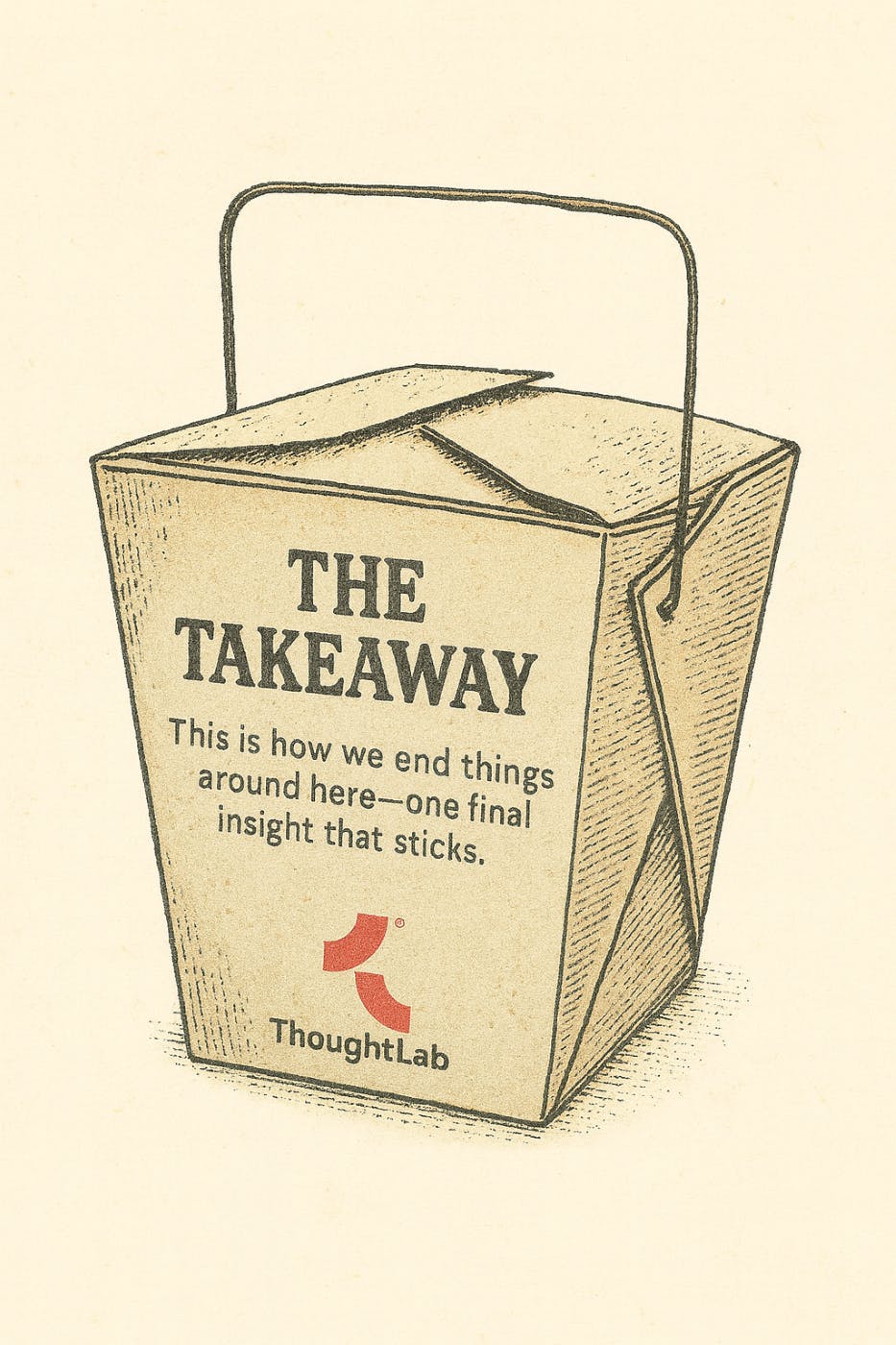
The Takeaway
A brand’s impact is not what it claims to believe. It’s what people experience because the brand exists.
That’s the part no purpose statement can fake for very long. The words can be polished. The campaign can be beautiful. The video can have the right music, the right lighting, the right slow-motion shot of someone looking hopeful near a window. But eventually the brand has to meet the person it’s been talking to, and that’s where the truth shows up.
It shows up in the product. In the service. In the policy. In the price. In the mistake. In the apology. In the small moment when a company either makes life a little easier or reminds people that the language was never really connected to the behavior.
That’s why Superman still works as more than nostalgia. He didn’t just stand for something. He did something. He showed up at the point of need. He made the promise visible.
Brands don’t need to wear the cape. Most of them shouldn’t. But they do need to know what they’re here to make better. Not in the abstract. Not in the keynote. Not in the quiet little paragraph under “Our Mission.” In the actual human experience of the brand.
Truth and justice may be a lot to ask from a box of cereal, but clarity, honesty, usefulness, and care are not.
At ThoughtLab, we believe impact starts there. Not with bigger language, but with sharper alignment between what a brand says, what it does, and what people actually feel because it exists.