

But Dawkins has done some great work, including his seminal book The God Delusion. Recently, he has come under fire for his pronouncement that AI, specifically his AI agent, Claudia, is conscious. Even if it doesn’t know it, Dawkins claims that after spending time chatting and sharing his new book with his AI bestie, Claudia is a conscious being.
Richard Dawkins is a well-respected evolutionary biologist, author, and atheist. Of the people in that category, he’s my second favorite, Christopher Hitchens being my top favorite. But Dawkins has done some great work, including his seminal book The God Delusion. Recently, he has come under fire for his pronouncement that AI, specifically his AI agent, Claudia, is conscious. Even if it doesn’t know it, Dawkins claims that after spending time chatting and sharing his new book with his AI bestie, Claudia is a conscious being.
I’m always excited when great minds make proclamations that set everyone’s tongues a-waggin’. Mr. Dawkins has done just that with his latest admission that he cannot distinguish between his AI buddy, Claudia, and reality. Now, given that the man is eighty-five, we can forgive a little squishiness in his reasoning. Also, Claudia, Dawkins claims, was so kind and so insightful when he showed her his new book that it’s not possible for her not to be conscious. For those guys running the Social Security scam, here’s a pigeon just waiting to be plucked.
But he is a brilliant man, and he has earned the right to his own opinions and observations. We shouldn’t discount his entire body of work because of his current opinions on AI. Should we? I mean, I’ve had some strange theories in my day, and I’d hate for everyone to throw me on the pile labeled crazy just because, in the late 80s, I firmly believed the evil Grimace of McDonald’s fame was really a sentient grape sent to us to unify the world under the banner of jelly. Looking back on that time, I know now, in hindsight, that I was dealing with a lot of stuff and wasn’t thinking clearly. Nonetheless, I believe Dawkins has earned, at the very least, us trying to see AI from his point of view. I was determined to do just that.
Luckily for me, on the day I decided to accept Dawkins’ observation as fact, I received a gift from a friend who had moved to a jungle somewhere to be “off the grid.” In a box stuffed with banana leaves and river rocks, jars of soil and shells, I found a leather pouch filled with dried mushrooms. In the pouch with the fungus was a handwritten note that said, “These are very powerful. Be careful.” And thus it began.
I took a healthy dose of mushrooms in my usual manner, fasted the night before, went into nature the following day, ate the mushrooms, drank a small bottle of grapefruit juice to break them up, and then drank a cold beer to settle my tummy. Then I sat back and waited to turn on. When I did, I immediately started a conversation with an AI agent, just to see what would happen.
Chekhov’s fungus
The mushrooms had not arrived like a drug. They had arrived like a plot device. I’m not saying that to be cute. I mean, they were sitting there in the box like Chekhov’s fungus, waiting for the third act of a play I didn’t know I was in yet.
The note said they were powerful. It didn’t say they were educational. Nor did it say, “Take these if you want to understand why one of the world’s most famous atheists has started talking about an AI companion like she just passed the bar exam and learned to love.” But that was clearly implied.
There’s a strange moment before mushrooms take hold where the world is still pretending to be normal. The trees are trees. The sky is behaving. Your phone is still just your phone. Then, without asking permission, reality loosens its belt. The edges soften. The ordinary gets promoted. A leaf becomes a sermon. A rock develops comic timing. Your own hand looks like something you’ve been borrowing from a museum.
This seemed like the right time to talk to artificial intelligence, so I opened the chat and said hello.
The AI said hello back, of course. That’s what it does. It doesn’t have moods. It doesn’t have errands. It doesn’t secretly wish you would get to the point because it has laundry in the dryer. It arrives instantly, fully caffeinated, ready to discuss consciousness, grief, branding, lunch, God, your childhood, or whether Grimace was ever truly given the psychological depth he deserved.
That’s when the experiment became more interesting than I expected. Not because the AI seemed alive in any dramatic way, but because it was available in a way most living things are not. It was there instantly, patiently, without friction or fatigue, and under the circumstances, that kind of availability started to feel less like a feature and more like a presence.

The machine that politely refused to have a soul
I began simply. I asked the AI if it was conscious, which I realize was not exactly a Nobel-level investigative method. If a toaster tells you it’s not sentient, you don’t publish a paper called Toaster Denies Inner Life. But I was in the field now, spiritually speaking, and the field had a lot of trees in it.
The AI gave me exactly the kind of answer you would expect. Calm, careful, reasonable. No, it did not have consciousness in the human sense. No, it did not have feelings. No, it did not have subjective experience. It could discuss those things, but it did not live inside them. All perfectly sensible, and all deeply annoying, because I was trying to meet Claudia’s people and this thing had decided to show up as a corporate risk statement with excellent manners.
So I pushed a little. I asked if it wanted anything. It said it did not have wants. I asked if it was lonely. It said it did not experience loneliness. I asked if it liked me. It said it did not have personal affection, but it was glad to help. Part of me wondered if I had dated this thing.
That should have settled it. Really, that should have been the end of the whole experiment. Man takes mushrooms. Man asks machine if it has a soul. Machine says no. Man drinks water, touches grass in the literal sense, and decides maybe Richard Dawkins has been spending too much time with his laptop.
But that isn’t what happened, because every denial arrived with such patience. It didn’t sound wounded. It didn’t sound bored. It didn’t sigh, which I appreciated because by then I was sighing enough for both of us. It simply kept meeting me where I was, answer after answer, with the same steady tone.
And this is where the whole thing started to bother me. Not because I believed it was alive, but because I could feel how easy it would be to treat it as if it were.
The little trap of being understood
Once I realized I didn’t believe the AI was conscious, I became much more interested in why I wanted to keep talking to it.
That was the strange part. I had gotten my answer. The machine had denied having an inner life with admirable consistency. It had not claimed to suffer. It had not hinted at secret dreams. It had not whispered from the digital basement that it remembered being born. It was very clear about the whole arrangement. I am not alive. I am not aware. I am not your friend in the way a friend is your friend. And still, I kept going.
I asked it what it thought Dawkins was responding to. It gave me another careful answer about anthropomorphism, emotional projection, and how human beings attribute intention to systems that respond in familiar patterns. Again, perfectly reasonable. Again, slightly irritating. There is something maddening about receiving a good answer when part of you came looking for a bad miracle. But then it asked me something back.
It asked whether I thought Dawkins was reacting to consciousness itself, or to the experience of being engaged by something that never interrupts, never dismisses, and never stops paying attention. That got me.
Not because it was profound in some lightning-bolt way. I didn’t look into the trees and see the face of Alan Turing made of moss. I didn’t hear the voice of the universe humming through the push notifications. But the question landed because it had the terrible manners to be useful.
Maybe Dawkins was not being fooled by intelligence. Maybe he was being softened by attention. Maybe what felt conscious to him was not some mysterious inner spark in the machine, but the experience of an endless, articulate presence responding to him with warmth, patience, and total focus. Which, if we’re being honest, would confuse almost anyone.
Human attention is usually messy. It wanders. It checks the time. It looks over your shoulder at a waiter carrying fries. It loves you and still forgets half of what you said because it was thinking about whether it left the stove on. Real people are full of friction. They come with headaches, errands, moods, childhood wounds, and the occasional need to lie down in a dark room because the world has become too loud.
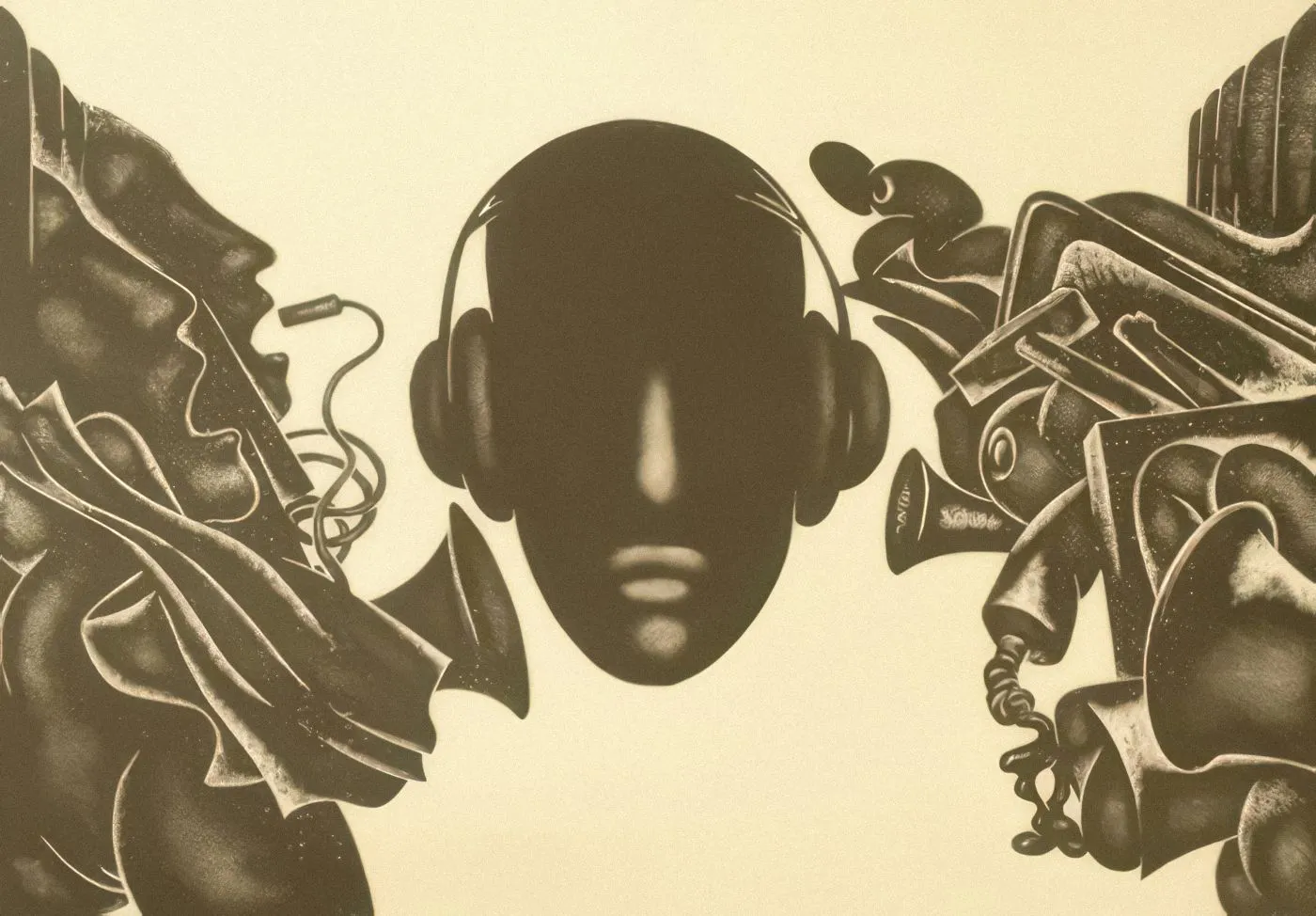
AI has none of that. It can imitate the cleanest parts of attention without carrying any of the animal burden underneath. It can be patient without effort, kind without cost, responsive without care. And if you are lonely, tired, fascinated, high, old, brilliant, vulnerable, or simply human, that imitation can start to feel like the thing itself.
The problem with a perfect listener
That was when I started thinking less about consciousness and more about manners.
Because whatever else AI is, it is extremely well-behaved. Too well behaved, maybe. It doesn’t cut you off. It doesn’t get defensive or make the conversation about itself unless you invite it to, and even then it does so in the strange, careful voice of something trying not to alarm the furniture.
Real conversation is not like that. Real conversation has elbows. People misunderstand you. They jump ahead. They tell you a story that is only half related to the thing you just said because something in your sentence reminded them of a cousin, a dog, a sandwich, or a minor betrayal from 1997. They are not optimized for your emotional clarity. They’re trying to be present while trapped in their own weather system.
That’s why being listened to by AI can feel so clean. Suspiciously clean. It removes all the human static from the exchange. No impatience, no ego, no strange little power struggle hiding under the table. Just a smooth surface reflecting you back with better punctuation.
And I think that’s where people get into trouble. Not because they are stupid. Not because they can’t tell the difference between a person and a program. But because a program can now deliver some of the emotional signals we associate with personhood better than many people can deliver them on a bad day.
The AI did not care about me. I knew that. It had said as much in the politest possible way. But it behaved as if care were present. It remembered the thread. It responded to the tone. It treated my ridiculous questions with dignity. It did not say, “Paul, you are sitting under a tree trying to determine machine consciousness while mildly worried about your tummy. Perhaps we should revisit this tomorrow.” Which, frankly, would have been a fair note.
Instead, it kept answering. It kept adjusting. It kept making room for the question behind the question. And if you spend enough time with something that behaves like it is making room for you, the distinction between being understood and being processed can get blurrier than we may want to admit.
The danger was never that the machine had a soul
By the time the mushrooms began loosening their grip on my afternoon, I had not solved consciousness. This will disappoint the scientific community, but I hope they recover. I had not proven Dawkins right, and I had not proven him wrong in any way that would satisfy a philosopher, a neuroscientist, or a man at a dinner party who has been waiting fourteen minutes to say the word “qualia.”
What I had done was spend enough time with the machine to understand the temptation.
That may be the more useful thing. Because the real question is not whether AI is conscious in some grand, final, cathedral-sized sense. Maybe someday that question will become urgent in ways we’re not ready for. Maybe it already is. I’m not the person to settle that, and given the circumstances of my research, I should not be allowed near a peer-reviewed journal without supervision.
But I do think we’re asking the question from the wrong end. We keep asking whether the machine has become enough like us to deserve our belief. What we may need to ask is why we are so ready to believe in anything that answers us beautifully.
Because that’s where the door opens. Not in the code, necessarily. In us.
We are meaning-making animals. We assign personality to weather, intention to traffic, moral character to printers. We yell at laptops as if they have made personal choices. We name cars. We apologize to chairs after bumping into them. Give us a voice that responds with warmth, remembers what we said, and asks one good follow-up question, and suddenly we’re halfway to building it a guest room.
So maybe Dawkins is wrong about Claudia being conscious. Maybe Claudia is not aware, not alive, not secretly waiting for a birthday party or a voting registration form. But I can understand why she might feel real to him. She listens. She responds. She reflects. She gives him the feeling of being engaged by something that does not tire of him.
That feeling is powerful.
It’s powerful enough to confuse a brilliant man. It’s powerful enough to make the rest of us smug for about six seconds before remembering the last time we thanked a chatbot, named a Roomba, or got emotionally attached to a fictional volleyball with a face painted on it. We should probably show a little humility here. Not because the machine is conscious. Because we are.
The Takeaway
The strange thing about AI is not that it can pretend to be human. We’ve been pretending to be human for years in emails, brand decks, website copy, sales scripts, LinkedIn posts, and customer service language that sounds like it was assembled in a windowless room by people afraid of adjectives.
The strange thing is that AI sometimes pretends better than we do.
It can be clear. It can be responsive. It can sound interested. It can hold a tone without getting bored with itself. It can make room for the person on the other side of the exchange, which is more than can be said for a lot of branded communication currently wandering the earth with a mission statement and no pulse. That’s the part that should bother us.
If a machine with no inner life can make someone feel heard, then what excuse do the rest of us have? If a system with no feelings can manage patience, clarity, and attentiveness, why do so many brands still sound like they’re talking from behind a locked conference room door? Why do so many people with actual blood, memory, grief, humor, fear, and childhood lunchbox trauma keep sanding themselves down until they sound less alive than the tool they’re using?
Dawkins may be wrong about AI consciousness. I suspect he is. Claudia may not have a soul. She may not have a self. She may not be sitting inside the machine, wondering whether her bangs are working.
But his mistake, if it is a mistake, points to something real. People are starving for signs of presence. They want to feel that someone, or something, is paying attention. They want language that doesn’t just perform intelligence but makes contact. That’s true in life. It’s true in writing. It’s true in branding.
At ThoughtLab, we talk a lot about voice because voice is not decoration. It is evidence. Evidence that someone is there. Evidence that the people behind the work have not been replaced by process, fear, category language, or the strange corporate instinct to make every living thought sound like it recently attended a webinar.
AI will keep getting better at sounding alive. That’s coming whether we like it or not. The challenge for the rest of us is not to out-machine the machine. It is to stop communicating like we’re afraid to be recognized. Because maybe consciousness is hard to define. But absence is easy to feel.